
Heatwaves & Health
Reviewed August 2026
Health authorities get their knickers in a twist when a heatwave is forecast, and boy, do we hear about it across every media platform. Yes, so it's going to be hot for longer than we'd like, but do you know why it's an issue beyond that unpleasantness? I thought I'd delve into the reasons for their collective conniptions.
This started out as a brief Facebook post, but it grew. I now appreciate why other commentators have only touched on one aspect or perspective of this topic. It's big...it's not good news, and it's important to understand ~ to keep you, your friends and family safe from this threat
Statistically, heatwaves rank as Australia's deadliest disaster (this also holds true for Europe and USA). Worse than floods, bushfires and cyclones. That thought made me pause.
In March 2008 I was heavily pregnant with my second son and he was dragging his heels. In those last two weeks before he arrived we had a heat wave in Adelaide. We had 15 days of 35°C or above. It was putrid. I was not happy, Jan!!
A SA Health report documents that in that period:
- Ambulance call outs increased by 10%
- Total cardiac related callouts increased by 9.8%
- Total neurological related callouts in the 65-74 age group increased by 39.9%
- The risk of being admitted to hospital for renal or mental health reasons increased
- The overall increase in hospital admissions increased by 5.9%
- Heat related admissions increased by a factor of 3 (that's over 200 people, and most being over the age of 75; incidentally, record keeping on this was improved and in the subsequent 2009 heatwave the numbers were much higher - it was estimated that an extra 304.4 heat-related presentations occurred during the 2009 heat wave, mainly affecting the 15–64 year (123.2) and the 75+ age groups (140.5))
- Total mortality increased by 4.8%
You may begin to understand why the health authorities are antsy when it comes to heatwaves.
What is a heatwave?
Traditionally a heatwave has been defined as a period of three days or more when the top temperature is 35°C or more.
The 2018/19 summer broke so many heat records across Australia that the Bureau of Meteorology (BOM) has changed the working definition of a heatwave to "three or more days of high maximum and minimum temperatures usual for that location"
The night time temperatures throughout a heatwave are now recognized as a significant factor. The reason for this is that if the day time heat doesn't disperse effectively overnight then humans have trouble recovering from that day's heat. There is a compounding effect on the body.
How does this kind of heat affect the body?
The average adult human's body runs at a temperature of 37°C. The following diagram shows how the body regulates its temperature:
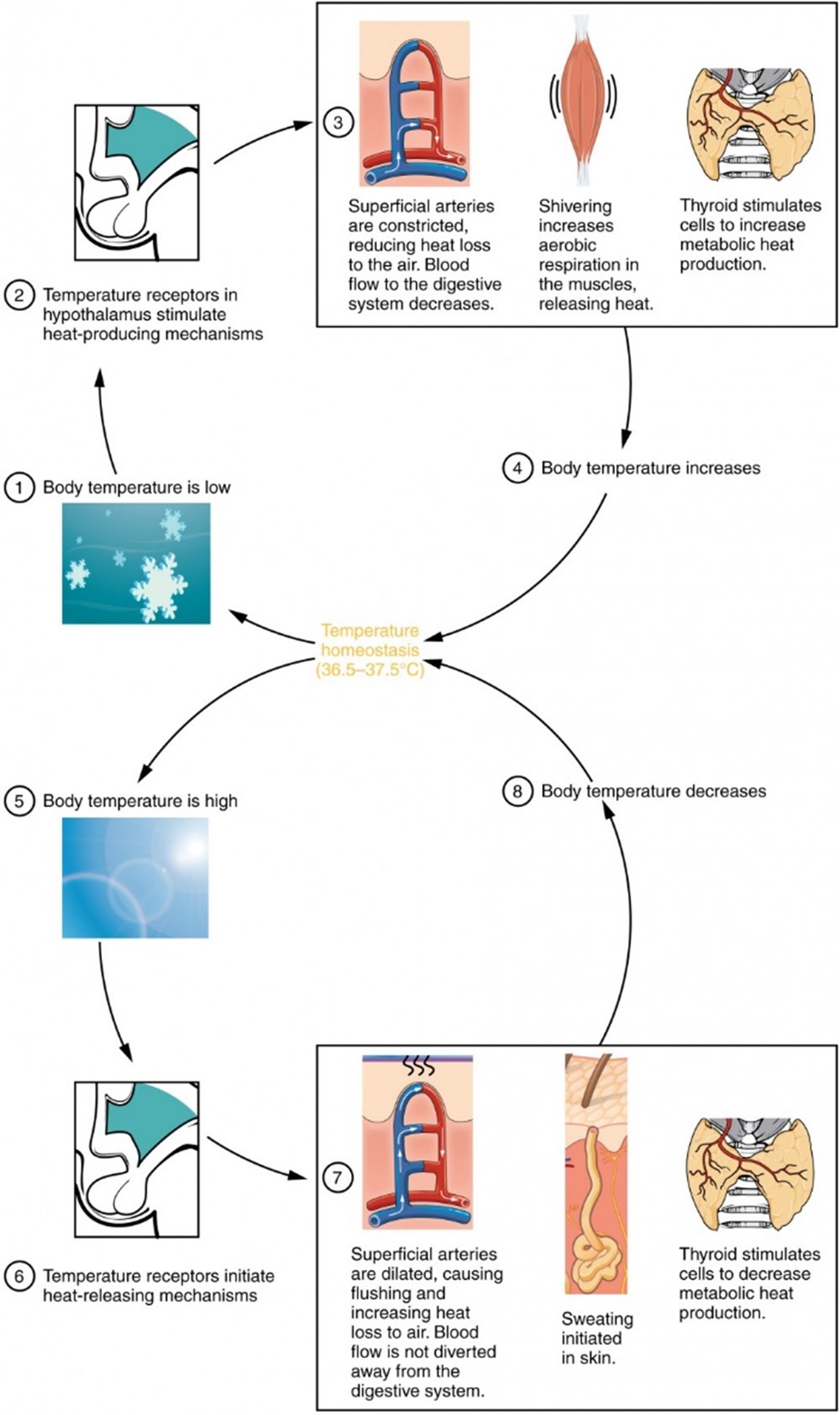
Overheating occurs when the body is surrounded by a temperature close to or exceeding body temperature of 37°C.
Where possible, homeostasis (the innate drive to bring the body's processes back to normal range) will work to reduce body temperature by:
- a) Perspiring and using evaporation to remove heat energy from the body
- b) Relocating to a cooler environment
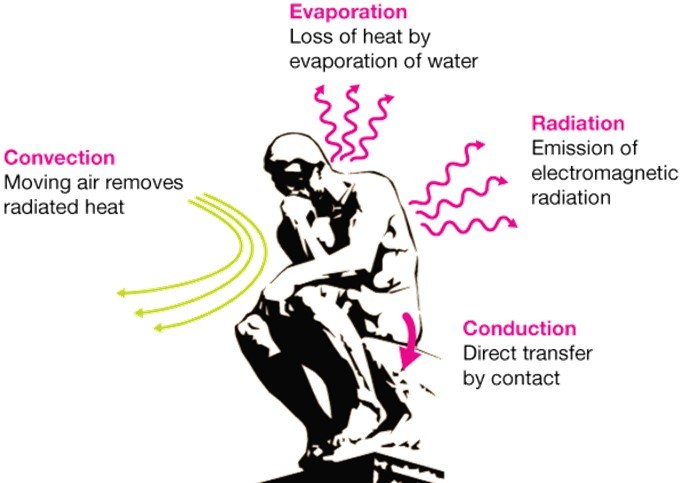
Having a standard fan will move the air around you and remove the heat which is radiating from the body [in this way fans cool human bodies, not rooms].
If restoring normal temperature in the body is not possible then the body will begin to overheat.
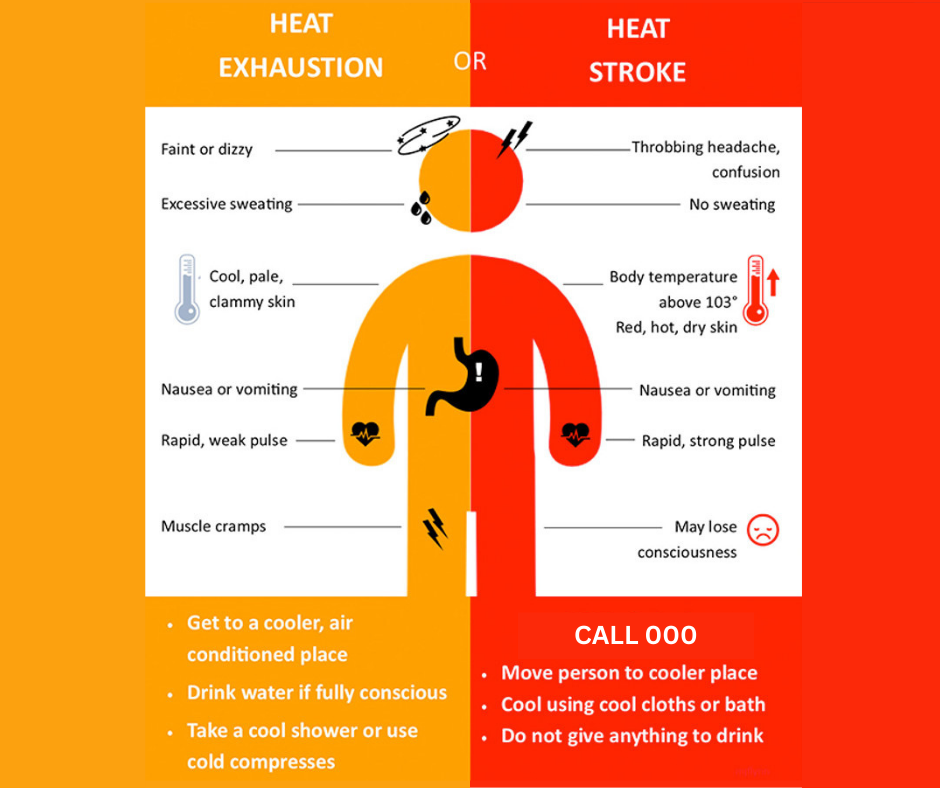
Progressive increase in core temperature and dehydration will lead to a spectrum of hyperthermia (overheating illness). In order of increasing severity, these are referred to as: Heat Stress, Heat Exhaustion and Heat Stroke.
- Heat Stress ~ a perception of discomfort related to heat exposure, with weakness, fatigue, cramps and dizziness.
- Heat Exhaustion ~ associated with an elevated core temperature above 38°C and a reduced amount of fluid in the body (dehydration) due to sweating without fluid replacement.
- Heat Stroke ~ a core body temperature above 40.5°C with confusion and impaired consciousness. This can be fatal if treatment is delayed.
How does humidity affect all of this?
Okay. To talk about humidity here is to open a can of bamboozling jargon. It's confusing.
For those who would like to delve into the nuts and bolts of it, feel free to wade through all the glorious detail on Wikipedia's "Wet-bulb temperature" page.
For everyone else ~
- When we sweat, water moves out of the pores of our skin and evaporates into the surrounding atmosphere. This process (shifting the sweat from fluid to gas) takes energy. That energy is taken from our body, and the upshot is a decrease in the temperature of our body.
- The effectiveness of evaporative cooling depends on humidity.
- the wet bulb temperature (WBT) is the lowest temperature that can be achieved by evaporation of water in the current weather conditions. It accounts for the temperature and the humidity at that time.
Some examples:
- high temperature (dry bulb temp) + low humidity (WBT) = dry heat
- evaporative cooling works well
- sweating is a viable strategy to cool a body
- high temperature (DBT) + high humidity (WBT) = wet heat
- evaporative cooling is less efficient
- sweat does not evaporate off your skin, thus is not a viable strategy to remove heat from the body...it just leaves you feeling wet (and miserably hot and you can't get cool AND you're becoming further dehydrated with no temperature reduction benefit).
- low temperature (DBT) + high humidity (WBT) = condensation (clouds) and rain
A WBT of 32°C is equivalent to a DBT of 55°C and is considered to be the top temperature that heat adapted people can do normal outdoor activities in.
A WBT of 35°C is equivalent to a DBT of 71°C and is considered to the theoretical human survivability limit for up to six hours of exposure.
"A 2015 study concluded that depending on the extent of future global warming, parts of the world could become uninhabitable due to deadly wet-bulb temperatures. A 2020 study reported cases where a 35°C wet-bulb temperature had already occurred, albeit too briefly and in too small a locality to cause fatalities."
The short of all of this:
If it is heatwave hot (35°C or above) and humid – then the human body's ability to self-cool is compromised.
Humidity serves to amplify the risk factors involved in a heatwave.
Humidity is not our friend.
Who is at risk in a heatwave?
We all need to be careful to maintain good hydration and choose to be in cool environments, but there are members of our population who need to take special care during a heatwave:
- Older people ~ their increased vulnerability relates to the fact that their bodies have a decreased ability to manage heat. They have a reduced awareness of thirst and a diminished ability to sweat. Underlying chronic disease (cardiovascular, respiratory, renal and mental health) also means they can become dehydrated and suffer from heat exhaustion and heat stroke much more readily.
- Pregnant and breastfeeding ~ research shows heatwaves are associated with increased numbers of preterm births; and as mum needs to provide extra fluids via breast milk for her baby during a heatwave, it is easier for her to become dehydrated herself.
- Babies and young children sweat less than adults ~ keep a close eye on them and keep them hydrated.
- Some medicines affect the way a body reacts to heat. According to Doctors for the Environment (Australia) these include "diuretics, many blood pressure and mood stabilizing drugs, antihistamines and anticholinergic drugs (latter used for a variety of conditions including movement disorders and bladder problems)".
- Reduced mobility ~ due to decreased ability to access fluids or move to cooler environments.
- Those who are socially isolated (cognitively impaired, homeless, have language problems) who may not have access to support or emergency alerts.
- Compared to non-heatwave periods in Adelaide between 1993 and 2006, hospital admissions for mental health reasons increased by 7.3%. Dizziness, confusion and headaches do not play nicely with headspace issues. If you or someone you care about is vulnerable on this front, please be aware of this and plan accordingly.
- Those without air conditioning or transport to get to a cooler environment.
- People who are outside ~ work or recreation.
- Sustained strenuous exercise ~ even fit healthy people can develop
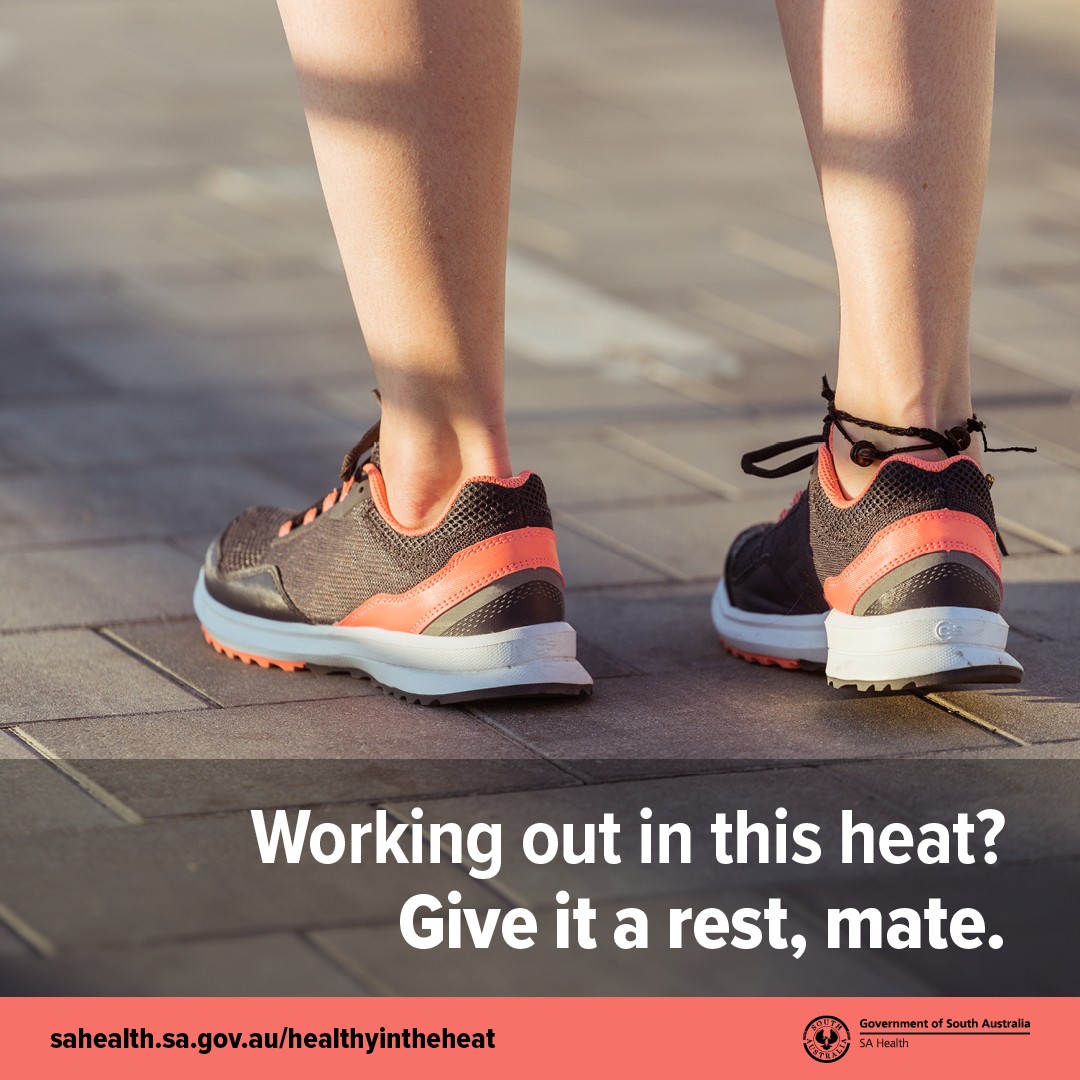 heat stroke. Fatalities have occurred among bushwalkers. This means we need to take care when continuing with our regular exercise routines during a heat wave ~ exercise in moderation and if you start to feel ill, stop; drink lots of water before, during and after exercise; if it must be outside, do it in the coolest part of the day; maybe tweak the routine to do an inside activity (gym, swimming) when it's so hot.
- High humidity levels ~ and haven't we seen more of this in Adelaide this summer?! Humidity means our sweat/evaporate/cool strategy is less effective and overheating happens more readily.
Remember, overheating/hyperthermia can occur on a stand alone hot day, it's not just during a heatwave that we are vulnerable to this challenge.
How do you avoid suffering from heat exposure during a heatwave?
This is the message we get every year, but it doesn't hurt to be reminded again.
- Keep Hydrated
- Wear plenty of SPF30+ sunscreen
- Don't leave kids or pets in the car
- Stay cool with a fan or air conditioner
- Seek shade
- Cool off with a shower or bath
- Wear clothes that are light weight, light coloured and loose fitting. Don't forget a hat.
What are the signs someone is suffering Heat Exhaustion or Heat Stroke, and what should you do about it?
The chart below is fairly self-explanatory.
Remember, heat can kill.
I spent a lot of time in a cool bath during the heatwave in March 2008. That and drinking so much water (since Ciaran was using my bladder as a trampoline, that was fun, not!), and we made it through with no personal disasters.
In a heatwave, please make good choices for your own health; check on the vulnerable people around you and share this knowledge. No one wants to become a statistic on the next SA Health Adelaide Heatwave Report.
For more information access www.sahealth.sa.gov.au/healthyintheheat
References
-
https://www.sahealth.sa.gov.au/wps/wcm/connect/a9d1dc0043cbf0f5891ead1013b2c54b/SA+Health+2009+Heat+wave+report.pdf?MOD=AJPERES&CACHEID=ROOTWORKSPACE-a9d1dc0043cbf0f5891ead1013b2c54b-nKQxnSP
-
https://www.sahealth.sa.gov.au/healthyintheheat
-
https://www.dea.org.au/wp-content/uploads/2021/01/DEA-Fact-Sheet_HeatwavesWEB.pdf
-
https://en.wikipedia.org/wiki/Wet-bulb_temperature