
How strong are your bones?
Reviewed August 2026
Multiple elements come in to maintaining strong and healthy bones including:
- healthy hormone regulation of bone quality (managed by Vit D ~ created by safe sun exposure (read more here));
- adequate supply of quality building materials (including calcium (Ca2+);
- and appropriate triggers to maintain quality bone ~ if we don't use them, load them, our body won't prioritise keeping them strong (read more here).
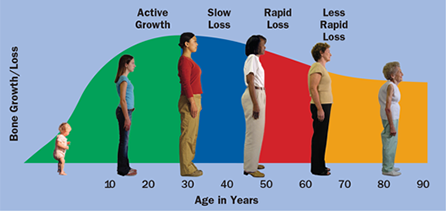
Our bones reach their peak of strength at about 30 years of age. After that there is a steady decline in strength and quality of bone with time. The better the quality of the bones at 30, the slower the decline. It's best to start with great bones at 30 ~ optimising your bone health when you're younger will definitely start you off with the best prognosis. So, it's true that osteoporosis (brittle and breakable bones) is a younger woman's responsibility!
Bone quality is affected by the elements mentioned above, but, with time, things like hormonal changes (perimenopause, cancer), changes in the gut's ability to absorb calcium from the foods we eat, and the impact of different medications that contribute to the deterioration of bone.
I have written about osteoporosis previously (read more here). Today I wanted to talk about two elements of this story that I haven't expanded on before ~ bone density testing and calcium.
Do you have healthy bones? How do you know? Bit hard to tell from the outside and you can't see osteopaenia (early signs of decreased quality of bone) on x-ray imaging until you've already lost 30% of bone density!! I would say that the horse has bolted before then. In fact, most people earn their diagnosis of osteoporosis by rocking up to A&E with a broken bone... and the horse is interstate!!
"...if you are over 50 and have a fall and break your wrist or arm or a bone in your leg or foot, you should be investigated for underlying osteoporosis"
Greg Lyubomirsky, CEO Healthy Bones Australia
Incidentally, a fracture (medical jargon) and a broken bone are essentially the same thing.
In 2025 it is estimated that 193,000 fractures will occur in Australia due to osteoporosis. Most will occur due to a minor incident such as tripping or falling. The most common bones that are broken due to osteoporosis are: hip (23%); spine (19%), wrist (13%) and then the remaining 45% are bundled together (leg, ankle, foot, arm, ribs).
Hip fracture remains the most serious and costly type of fracture. Studies have shown up to half of all hip fracture patients had a prior fracture and many of these were related to undiagnosed osteoporosis. It's also interesting to note that 30% of all bone fractures related to bone health are in men.
Most people would be aware there is a test your GP can send you for called a bone density test. Scanning of the axial skeleton by dual energy X-ray absorptiometry (DXA) is the gold standard in Australia for the measurement of bone mineral density (BMD). DXA is a diagnostic tool for osteoporosis or osteopenia, enabling doctors to determine the extent of bone loss for clinical decision making.
DXA is a special kind of x-ray where the technician will take an image through 3 bony sites in your body (lumbar spine, neck of the femur (hip bone) and your wrist) and use statistics to establish the quality of your bones and your risk of sustaining a fracture in the next 10 years. They have a great graph showing the safe trend of decreasing quality of bone with age, and if your stats come in under that band then a conversation about medical management is on the cards.
For your information, Healthy Bones Australia provide a great breakdown explaining what the bone density report actually tells your GP. You can find it by tapping on this link ~ here.
Frustratingly, the PBS only subsidises bone density testing if you've already had a fracture, or if you're over 70 years of age. There are a few other reasons the GP can send you for a bone density test (e.g. hormonal problems and gut absorption problems). Given statistics show we're vulnerable after 50 years of age...I think that's a bit rough. It really would be nice to prevent such a thing rather than react post crisis.
So.
Prevention = healthy sun exposure for Vit D + weight bearing exercise and resistance training (being sedentary is the worst thing for your bones...and the rest of you!) + a healthy diet ~ let's talk about calcium.
I have to say up front, calcium isn't just about milk and bones, it's about movement, messages and maintenance all through your body. Here's a breakdown of the roles calcium plays in our bodies:
- Bone and teeth strength – about 99% of calcium is stored here, giving structure, hardness, and resilience.
- Muscle contraction – calcium ions are essential for muscles (including the heart) to contract and relax properly.
- Nerve signalling – calcium helps transmit messages between nerves and from nerves to muscles.
- Blood clotting – calcium is a key factor in the clotting cascade, helping prevent excessive bleeding.
- Hormone release – calcium regulates the release of certain hormones and enzymes.
- Cell signalling – acts as a messenger inside cells, regulating many processes (e.g., metabolism, cell growth).
- Heart rhythm regulation – calcium is vital for the electrical activity that keeps your heart beating steadily.
- Enzyme function – some enzymes require calcium to be activated and work efficiently.
I could get excited here and become distracted by all the nerve signalling and muscle strength minutia related to calcium...very easily ~ hello, Chiro here...but we're talking about bone density. Which is also very important.
Here's the thing that sparked this particular blog in the first place: beyond breaking a bone, how do we know if we are consuming enough calcium to keep our bones healthy?
Bones act like a calcium bank in the body. If there is not enough calcium in your diet, the body will take more calcium from your bones to do all the things mentioned above. If this happens your bone density decreases, and you are at risk of developing osteoporosis.
The Australian recommended daily intake of calcium is shown in the chart below. Note that excessive calcium intake (such as is possible with supplementation) is not recommended as it can cause kidney stones. It has been shown that dietary calcium is better than supplements for this reason.
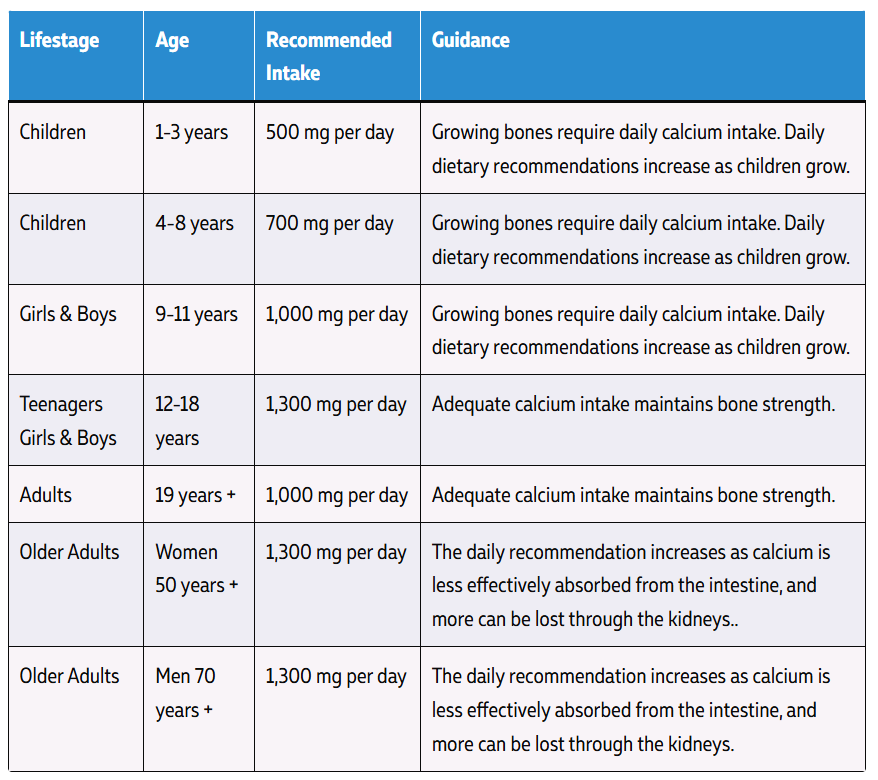
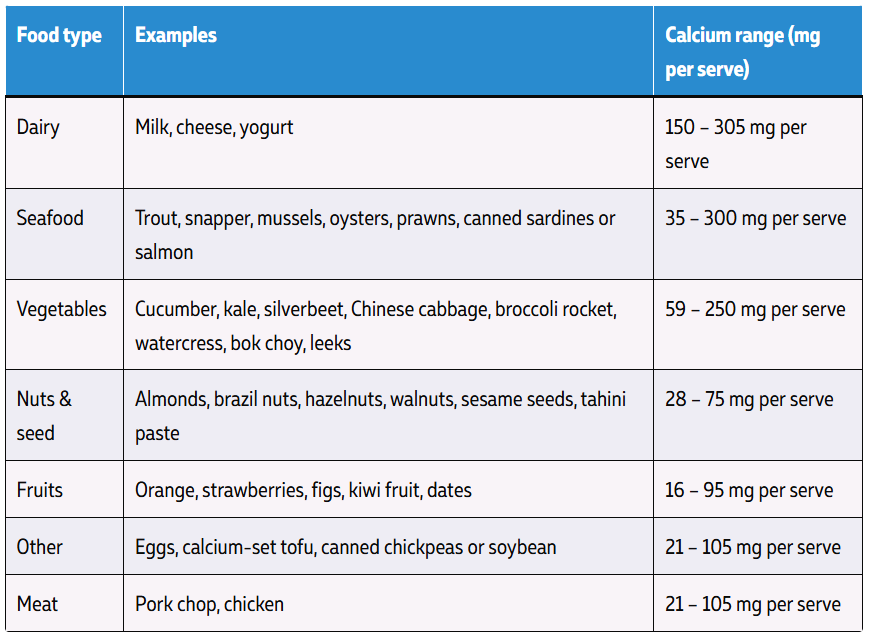
The only way you can determine if you're getting enough calcium from your diet is to add up the calcium in the food you are eating.
Here is a list of calcium rich foods (again, thanks to Healthy Bones Australia):
Finally, Healthy Bones Australia have created an online bone health self-assessment tool. It's simple, practical, and gives you valuable information you can take to your GP to kickstart a conversation about your bone health. You can find it here.
I consider myself very lucky to have been part of a wide variety of people's health team across many years. Across that time, I have worked with many people who have sustained osteoporotic fractures including people who have tripped and fallen and fractured wrists, to those who have sustained insidious vertebral fractures that they've not even noticed. One beautiful lady just stood from her armchair one evening and fractured her pelvis ~ completely out of the blue. Sometimes the experience has so knocked these people's confidence in their bodies that their quality of life going forward is limited beyond the impact of the fracture itself. These experiences have taught me that osteoporosis is a serious issue. They have made me rather passionate about educating people ~ older and younger ~ about their bone health. Please. Don't let poor bone health limit you living your life to the full.
Sources
-
https://healthybonesaustralia.org.au/news/most-common-fracture-sites-due-to-osteoporosis/
-
https://healthybonesaustralia.org.au/wp-content/uploads/2023/07/hba-gp-bone-density-brochure-2023-v10.pdf
-
https://healthybonesaustralia.org.au/your-bone-health/calcium/
-
https://link.springer.com/article/10.1007/s11914-025-00904-7?utm
-
https://www.knowyourbones.org.au/