
Water ~ how much is enough?
Reviewed August 2026
So how much water do we actually need and how do we make sure we're getting the daily requirements to maintain healthy hydration and reap the rewards of a happily hydrated and healthy body?
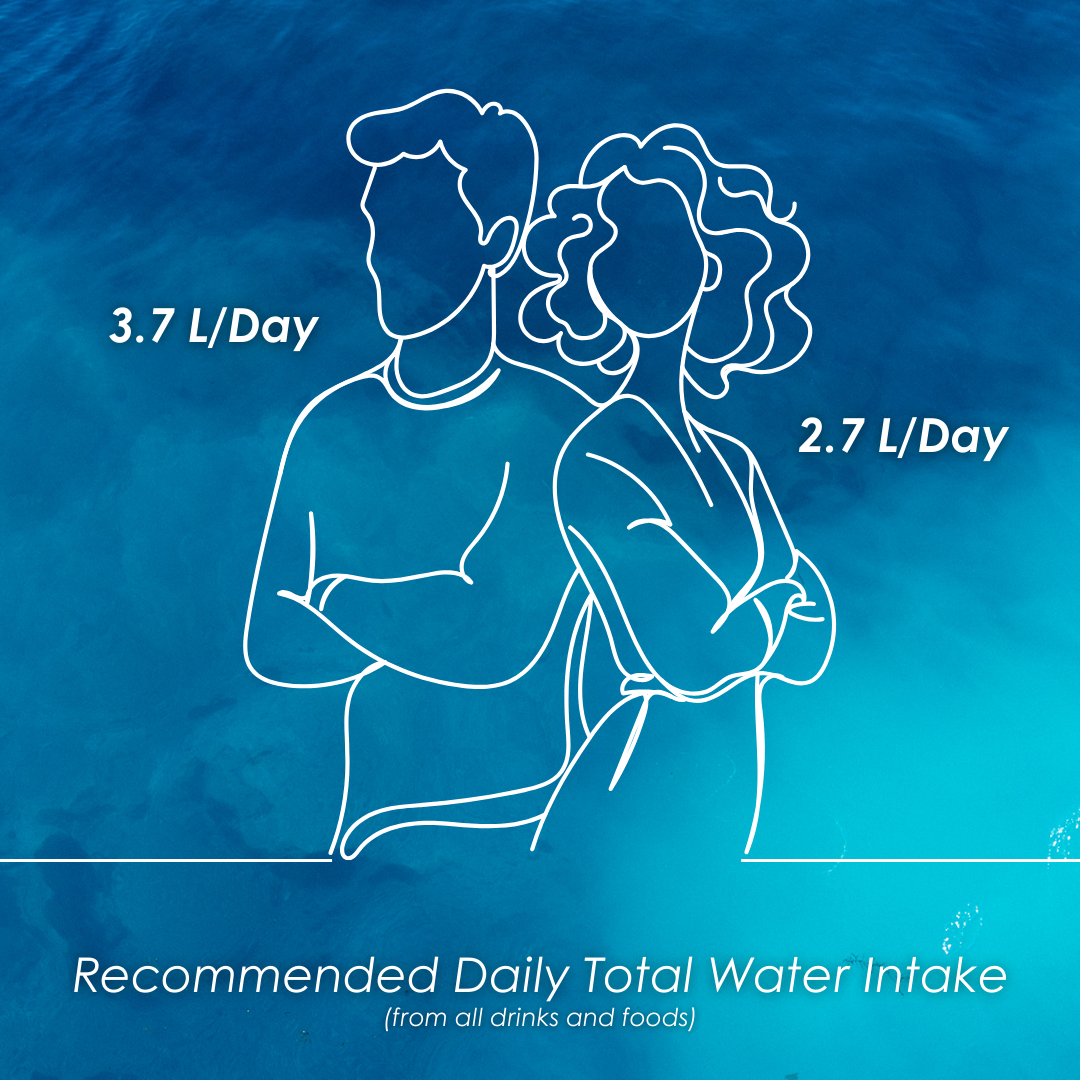
Depending on body size, heat, level of activity and whether the person is pregnant or breastfeeding, most adults require 2-3 litres of water each day.
Breaking that down:
- Men generally need 3.7 L/Day (from all sources ~ food and drink)
- Women generally need 2.7 L/day (from all sources ~ food and drink)
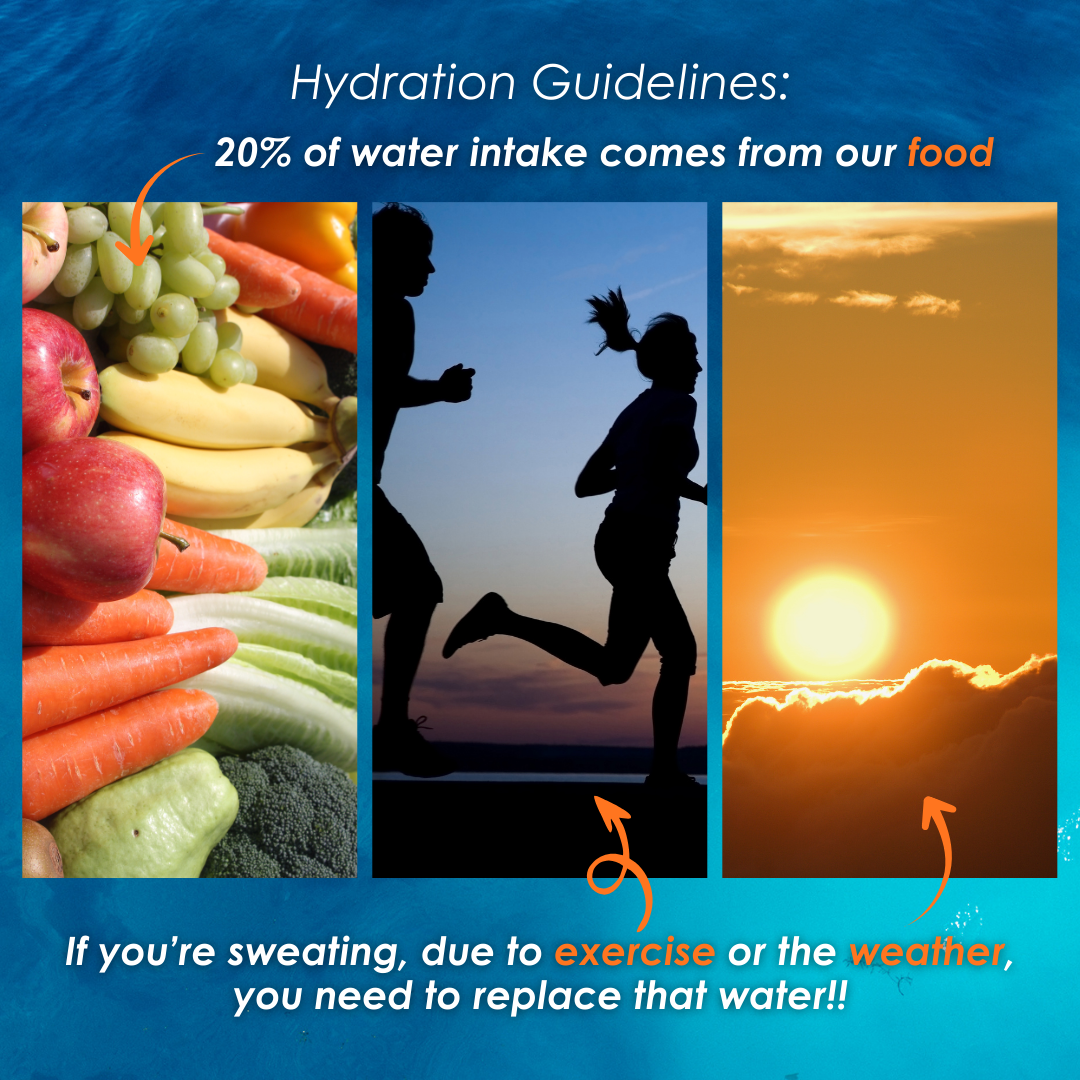
- We get 20% of our water from food (fruit, veg, soups)
- We need more water if we are in a hot environment and are sweating
- We need more water when we are more active (exercise, work) and we are sweating
As mentioned earlier, thirst is NOT a good indicator of the need to drink more water. Waiting till you feel thirsty is often too late especially for five groups of people.
If you are older, stressed, active, pregnant/breastfeeding or hot, chances are you need more water!
- Older adults ~ as we age, the thirst mechanism becomes less sensitive. Since we know thirst is already a signal that comes too late to prevent dehydration, this means older people are even more likely to become dehydrated. Older adults dehydrate faster and often present at the emergency department with an altered mental state. This shows up as confusion, falls, hypotension (low blood pressure), frailty and a possible need for admission
- High stress ~ when a person is in a state of fight or flight the sympathetic part of their Autonomic Nervous System is running the show (you can read more about this here). The sympathetic nervous system is not concerned with hydration, so this need is put to the side as a lower priority. Stress hormones dampen thirst signals, meaning busy, stressed people often run on empty without realising it.
- Pregnant/Breastfeeding Women ~ a pregnant or breastfeeding body has extra work to do. This means water is not just supporting you, you're drinking for two!
- Nausea and vomiting in early pregnancy can cause dehydration before thirst kicks in. Dehydration in pregnancy can cause headaches, constipation, muscle cramps and UTIs. In pregnancy, the body is building tissues, making more blood (this can increase volume by 50%) and amniotic fluid (made mostly of water and in need of constant replenishment).
- When producing breast milk (this requires at least 1 extra litre a day and hormones involved in breastmilk production suppress thirst!). Signs of dehydration in breastfeeding mums include fatigue, brain fog, cracked lips, reduced milk supply and irritability.
- Athlete and Active People ~ if you are sweating you are losing water and you need to replace it. During exertion adrenaline masks thirst so these people do not notice dehydration until their performance drops or they start cramping.
- Hot and humid ~ again, if you are sweating you need to replace the water you are losing. The sweating is your body's strategy to reduce it's temperature. Humidity makes this whole process another order of magnitude harder for the body. Both can lead to hyperthermia, which at it's worst is deadly (you can read more about this here).
What should we drink? Water. Obviously. However, as I mentioned in the intro, our heads (and tastebuds) are often turned by the sugar, flavour and caffeine additives that we often consume with our water and mentally tick the "yes, I've been having fluids" box. Let's look at why the other drinks we indulge in might contribute to our daily water intake, but don't cut it on the hydration front.
Tea and coffee ~ popular belief has it that the caffeine in these drinks may increase our alertness, but it also has a diuretic effect that makes you urinate more. It turns out that coffee is a mild diuretic. It probably won't make you dehydrated if you drink it regularly as your body will adapt ~ humans build up a tolerance to the diuretic effects of caffeine across 1-4 days. Officially, we can have up to 400mg of caffeine per day. However, caffeine will not help if you are already dehydrated and then drink tea orcoffee.
Soft drinks or energy drinks ~ often high in sugars and stimulants which can increase dehydration by causing increased inflammation and metabolic load in the body.
Fruit juice and cordials ~ high sugar content makes for slower absorption. Too much of these can lead to blood sugar spikes and inflammation.
Herbal teas and infused waters (i.e. added fruit or herbs) ~ these are considered the best water "alternatives" as they hydrate without caffeine, sugar or diuretics.
Alcohol ~ it turns out that alcohol suppresses the hormone which put the breaks on urine production (vasopressin). Vasopressin works to make the kidneys conserve water. Without that, the body produces more urine, the body loses more water and thus becomes dehydrated.
The rule of thumb ~ if your drink contains caffeine, sugar, alcohol or artificial additives then it doesn't count 1:1 towards your hydration goal.
Some simple ways to hit your water goals:
- Think of hydration like you brush your teeth ~ don't wait for a problem, make it a part of your daily routine.
- Drink to a plan, not to your thirst. Keep a bottle nearby, sip often and link hydration to daily habits (every meal, before/after exercise, with breastfeeding, even to the clock [e.g. the first litre before noon]).
- For every coffee/tea, have an extra glass of water.
- Use a 1L bottle of water, fill it twice a day and you've likely ticked the hydration box for the day!
Hydration isn't just about drinking enough, it's about giving your cells what they need to function well. Energy, skin, digestion, mood, joint mobility, mental clarity ~ they all rely on water.
At the Adelaide Chiropractic Centre we talk about hydration because your discs, joints, muscles and nervous system love water. Hydrated tissues make for better movement, better healing and better resilience, helping you be the best version of you!
References:
- Sawka, M.N. et al. "Human water needs." Nutrition Reviews, 2005.
- Institute of Medicine. "Dietary Reference Intakes for Water, Potassium, Sodium, Chloride, and Sulfate." National Academies Press, 2005.
- Cheuvront, S.N., & Kenefick, R.W. "Dehydration: Physiology, assessment, and performance effects." Comprehensive Physiology, 2014.
- RACGP & Australian Guidelines on Hydration
- https://medlineplus.gov/caffeine.html