
Why Exercise?
Reviewed August 2026
We all know if you take a deteriorated thing, knock off the dross and rehabilitate the moving parts then it's going to work better. This brings better quality of function, and then, with a little bit of regular maintenance, it can live a longer and happier life. It takes energy, work and time to achieve this change, but it can be done.
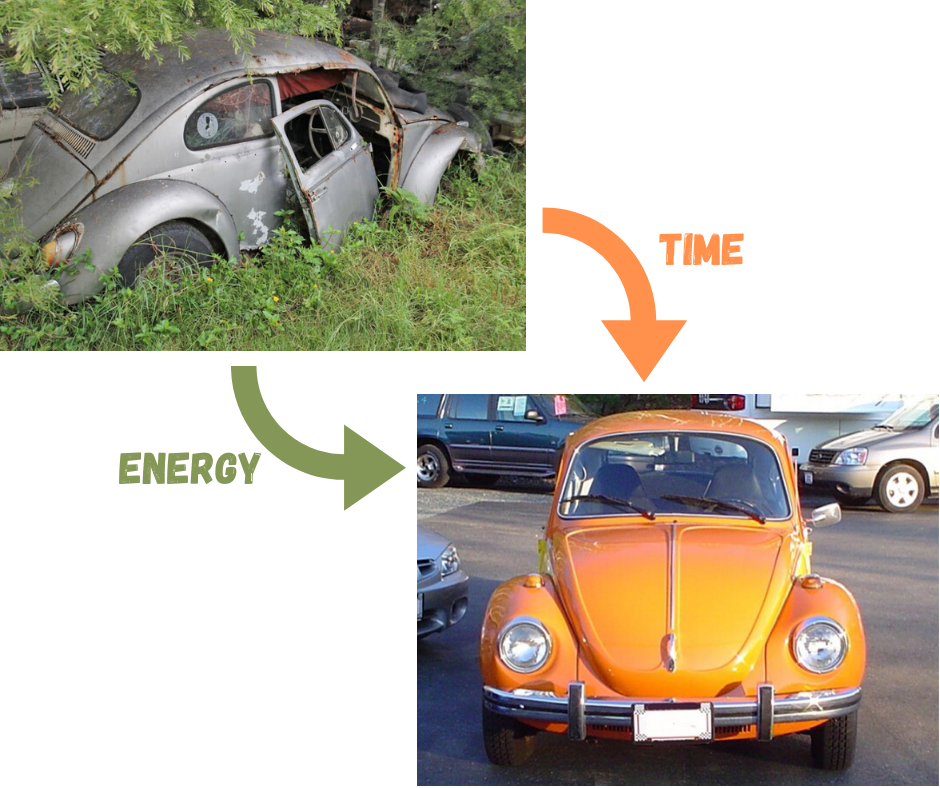
The same goes for human bodies. Regardless of the glitch ~ an autoimmune dysfunction (like cystic fibrosis or asthma), a propensity toward headaches, fighting a cancer, being in the aftermath of physical trauma, living with depression or an aggravation of the frame causing back or neck pain ~ being physically active and working toward or maintaining a strong, fit and able frame improves function of the body and quality of life.
Research shows regular exercise has so many benefits: improved sleep; improved cognitive function; better blood pressure and cholesterol levels; less muscular deterioration and maintenance of bone density; decreased falls risk; prevention of cardiovascular disease and type 2 diabetes; reduced risk of various cancers, dementia and weight gain. Regular exercise is good stuff!
...and it goes further, being strong, fit and able does such good things for a person's headspace:
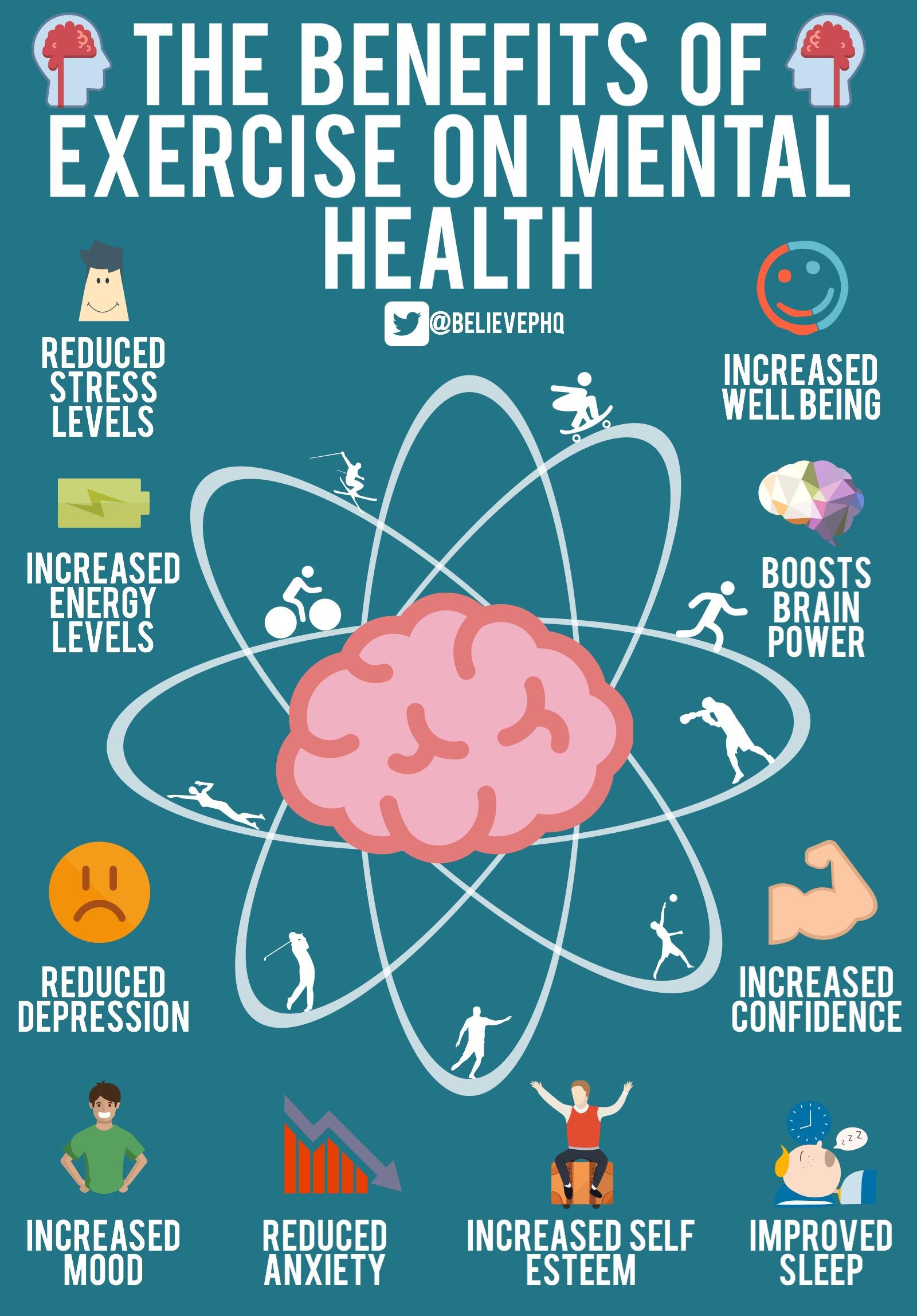
Being strong, fit and able just takes so much of the proverbial straw off the camel's back and shifts a person away from the threshold above which the glitches have a greater impact on day to day life.
In fact, physical inactivity is a neglected risk factor for all of the above. It's no wonder everyone working in the realms of health and the government (who has to manage how the deterioration of our bodies is paid for) are constantly jumping up and down about encouraging us to be proactive on this front!
So why is it so hard to make ourselves DO this...put the time and energy into looking after our bodies? We know many of us don't. In Australia there has been a decline in physical activity participation which has persisted across the last two decades(1). While there are many people who are suffering from physical inactivity, statistically the worst offenders are found in the 13-17 and the over 65 age brackets.
Unfortunately, we've been trained over the years to believe that if we have a health trouble there will be a pill or a surgery to fix it. Many now have an unreal expectation that they can place said health trouble into a specialist's hands and absolve all responsibility. The remedy will help... or not...and you can blame the intervention either way. However, being a passive victim never achieved much.
 ~ Bill Phillips
There is a multitude of quality research touting the benefits of regular exercise. We know, without a doubt, that our bodies are built to move...and that if you don't move them regularly, they will deteriorate.
We also know now that the 2012 declaration that "sitting is the new smoking" in terms of association with mortality risk, is not true. It's not the sitting that's the problem. It's the inactivity...the lack of incidental movement with increasingly sedentary behaviour that is the problem (2). Sedentary behaviour is doing terrible things to our musculoskeletal system, and our overall health. The old adage, "Use it or lose it!" fits nicely here.
The mantra for all is now ~
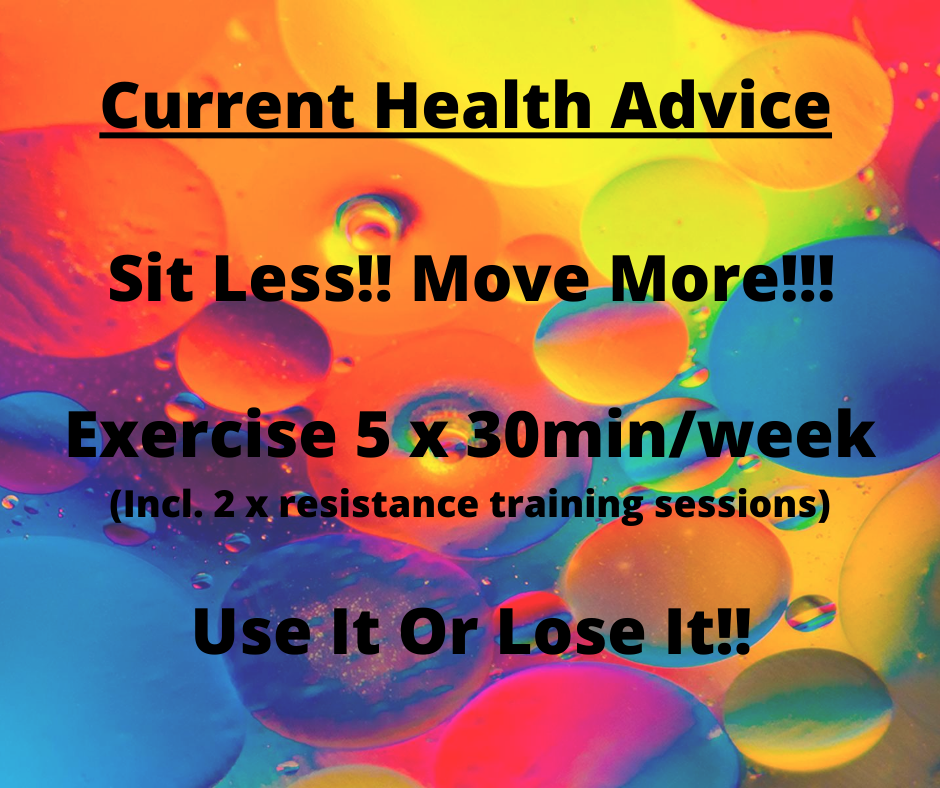
"Sit Less!! Move More!!"
...and more specifically, the advice distilled from meta-analysis of the world's research in this arena and put forward by governments around the world (including Australia's) as best practice, is that we need to do five 30 minute sessions of exercise each week, with two of these five sessions involving some kind of resistance training.
Now, resistance training does not mean resist doing it!! It means a kind of exercise where you work your muscles to build strength and endurance. Yes, gym work and weights, but that won't suit everyone. It also includes Pilates, working with resistance bands, swimming (which can be good if you have a cranky joint or two), and floor classes working with the weight of your body.
A Note On Swimming ~ it has its pros and cons, but on the up side it is resistance training without the stress on bones and joints which is very good if you have old injuries that limit your options. Swimming will also build muscle much faster and more effectively than traditional cardio exercise like running and cycling.
Recent world events have highlighted how significant both daily incidental movement and regular physical activity are to everyone's health and wellbeing. The presence of COVID19 in our world has led to people staying home, being much more sedentary and not having access to their usual avenues of regular exercise. Working towards being "strong, fit and able" is a part of the discussion I have with all of my people. It's been very obvious that dropping this facet of the maintenance they do to keep their bodies running well has had a huge impact on their musculoskeletal system (much greater incidence of pain and dysfunction) and headspace...let alone the impact it's had on the scales.
People have had to think outside the box, get creative and more self-motivated to make the 5 x 30 happen each week, but they're getting back on track now and reaping the rewards of reinstating these good habits. It has been a vivid reminder of how important "sitting less and moving more" is to our health.
One last thought ~ in the words of The Earl of Derby: