
Inflammation ~ Friend or Foe
Reviewed August 2026
Our amazing bodies have several great defence mechanisms. They're tried and true, but somehow they get a bad rap. Possibly because we feel less than awesome while these mechanisms are in play. A good example of this is fever. During a fever the body is cleverly altering our body's temperature, taking it into zones that bacteria and viruses can't survive, in order to kill off the bug. Not fun for us short term (and monitoring of the vulnerable is sensible), but effective in defending the body.
Another of our marvellous defence mechanisms is inflammation. Inflammation has a bad reputation. In our heads it is associated with swollen, angry, painful tissues. The classic examples are low back or neck pain, a rolled ankle, the razor blade throat or a splitting headache from congested sinuses. We are almost conditioned now to reach for medication to stop these symptoms, but are we doing ourselves any favours in doing so? Yes, the pain is eased, but what's the cost?
Inflammation happens when cells are damaged. This can be physical damage or intrusion of foreign matter (infectious or not). The damaged cells send out chemicals (small protein messengers) called cytokines to call for help and improve blood flow to the area to get the help there fast (hence the swelling). The white blood cells (WBCs) swoop in to remove the noxious stimuli (bits of damaged cells, toxins, bacteria/viruses) and as they do so they start putting out a different type of chemical messenger which stops the recruitment of other WBC's to the region. As the gradient of "come hither" chemicals is swamped by the "yep, we've got it" signal there is a transition to "and now let's heal this mess" (4,5).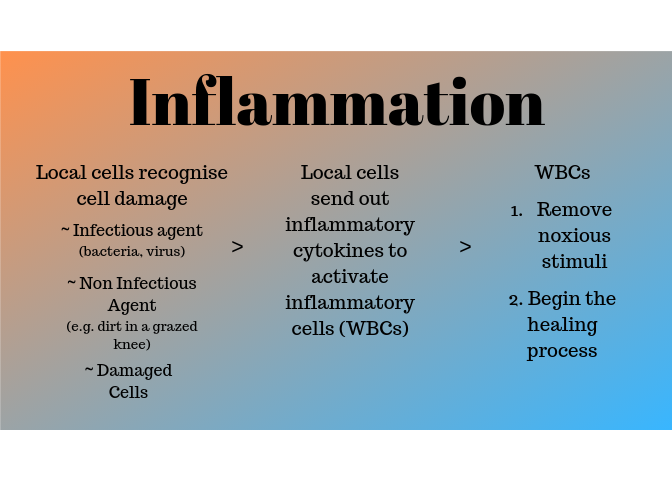 So where is it appropriate to use anti-inflammatory medications to manage inflammation? We have discussed the pros and cons of different kinds of over the counter pain medications in another blog, including anti-inflammatories, recently. There is a current debate questioning whether we should be using anti-inflammatory drugs for musculoskeletal injuries at all. As noted above, it is the arrival of WBCs to the damaged region at the beginning of the inflammatory process that initiates healing. The question remains, is using anti-inflammatory drugs affecting the quality of the healing process by stopping the optimal amount of WBCs arriving on the scene initially?
What the current research shows when it comes to acute musculoskeletal injuries (3,4):
(a) Muscular injury (including delayed onset muscle soreness (DOMS) that people get after a challenging exercise session) - NSAIDs limit and delay the growth of new muscle fibres and increase fibrosis (i.e. lesser quality muscle as an end result)
(b) Ligamentous injuries – data is limited, but implies that NSAIDs promote earlier return to activity, but less stability and decreased range of motion in the healed joint.
(c) Tendon injuries (this includes things like tennis/golfer's elbow, Achilles strain, patellar tendon strain (knee), and rotator cuff tendon injuries (shoulder)) – these injuries should be referred to as tendinopathies as they seem to not be inflammatory in nature, but some researchers argue that a poor inflammatory process is the precursor to the tendon degeneration seen in these disorders. Limited research shows NSAIDS provide pain relief for tendinosis, but the long term effect is unclear.
An interesting note – research shows that if a soft tissue is injured, and is then injured again while still healing, then there will be an increase in fibrosis once the tissue is finally healed (i.e. more scarring) (4). So don't return to activity too early after an injury!
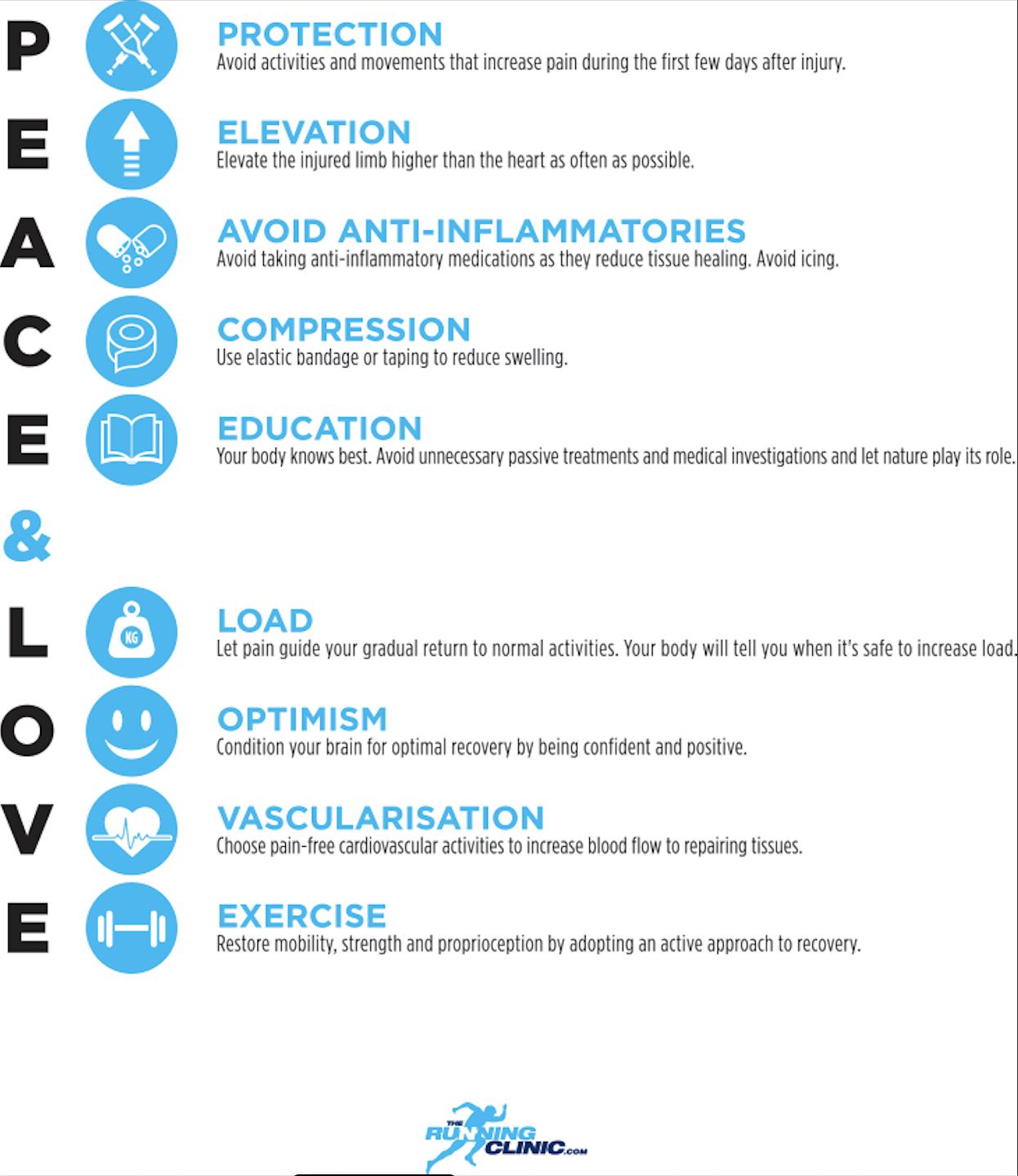
In April 2019 in the British Journal of Sports Medicine Duboise and Esculeir went so far as to suggest we alter the long standing management strategy for soft tissue injuries of RICE (Rest, Ice, Compression, Elevation) to PEACE & LOVE (5).
The PEACE & LOVE acronym separates care strategies temporally (first 1-3 days of care, and then what to do after those first few days), emphasises the importance of educating the patient so they have realistic expectations about recovery and promotes avoiding NSAIDs where possible as they may help with immediate pain and function, but "may have harmful effects on optimal tissue repair (5)."
Chronic Inflammation refers to long term inflammation which can last several months or even years. It can be caused by: failure to eliminate the acute inflammation trigger; auto-immune dysfunction (the immune system mis-identifying and attacking normal tissues of the body); exposure to a low level irritant over a long period of time (e.g. a chemical) (6). In chronic inflammation the persistence of the "come hither" pro inflammatory signals affects the ability of the inflammatory cells to kick out the "yep, we've got it" signal and thus healing is disrupted.
There are many disease processes that involve chronic inflammation. Some examples are asthma, rheumatoid arthritis, ulcerative colitis, Crohn's disease, sinusitis, and the list goes on. The use of anti-inflammatory drugs here is complicated and you need to speak with your GP or medical specialist to create a plan for dealing with the chronic inflammation element of your health if you are in this boat.
Interestingly, research shows that aging is related to an increase in pro-inflammatory systemic factors. This directly degrades skeletal muscle healing (4). This makes me wonder if slower healing with age is a result of this systemic change in our inflammatory response. The argument for eating well to decrease the pro-inflammatory elements in our diets comes in here...but that's another story.
As Professor W B Leadbetter said in 1990
"Inflammation can occur without healing,
but healing cannot occur without inflammation. (3)"
So while unpleasant at times, inflammation is an important part of how our body heals. While medications can limit the pain caused by the swelling associated with acute inflammation, it comes at the cost of the quality of the healed tissue. Maybe we could consider managing the pain of soft tissue injuries with other strategies (as per PEACE & LOVE) and let the healing occur unimpeded.
At the Adelaide Chiropractic Centre we want to share the current scientific understandings of how the body works with you so you can make the best informed choices about your health. Your every day choices affect your health now and into the future.