
Loving Your Curves (Scoliosis)
Reviewed August 2026
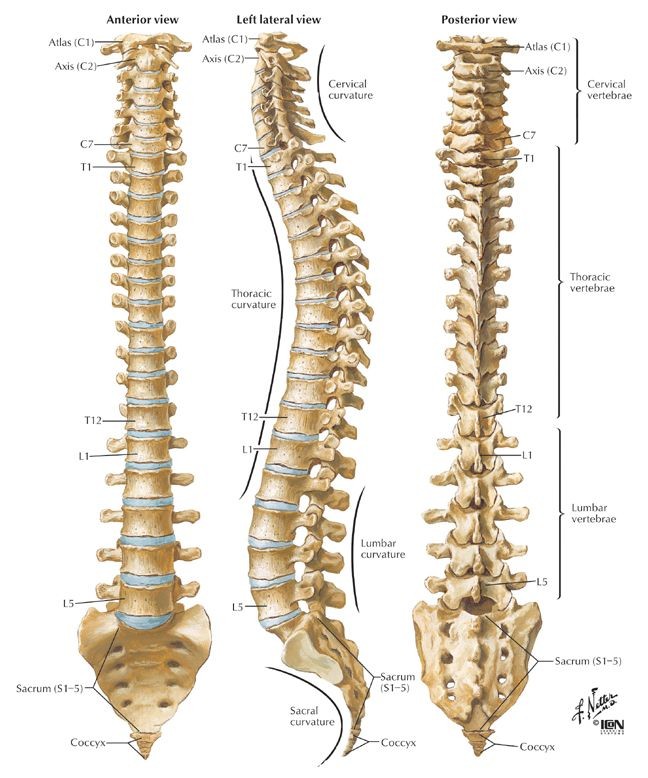
Our spine is structurally designed to have curves in it. Looking at it from the front it should ideally be straight. Looking at it from the side there should be three curves: the cervical lordosis (curving forward); the thoracic kyphosis (curving backwards); and the lumbar lordosis (curving forward). These curves are designed to transfer the weight of our body via the spine to the pelvis and on through to our legs and feet. Neutral position for these curves has our ear, shoulder, hip and ankle joint lining up when you look at the standing body from the side. This is the definition of "good posture". When aligned with good posture the biomechanics of the body work the way they are built to.
The first way this ideal array of curves can go awry is when we let our posture go. Poor posture can be caused by movement tics lingering after and old injury (you learned how to move around a healing injury and didn't return to normal movement patterns after the tissue was healed +/- chronic pain). It can also be caused by persistent unbalanced working postures (e.g. desk jobs, brick layers, child carers, violinists...) or particular sporting actions (e.g. rotating leg to kick soccer ball over years, fast bowling in cricket...). Unfortunately, poor posture can also be the legacy of just not keeping yourself fit and moving. We need to be strong, fit and able to get the best from our bodies and weak postural muscles will definitely let the team down.
The "ideal curves" of the spine can dysfunction by becoming more pronounced or by being reduced. It doesn't matter which way they go away from neutral, the rest of the frame then has to adapt and compensate. First come muscle imbalances, then musculoskeletal wear and tear injuries. Then with time there are bony changes...these cannot be reversed.
At any point through this cascade the brain can throw a wobbly about the situation and give you pain.
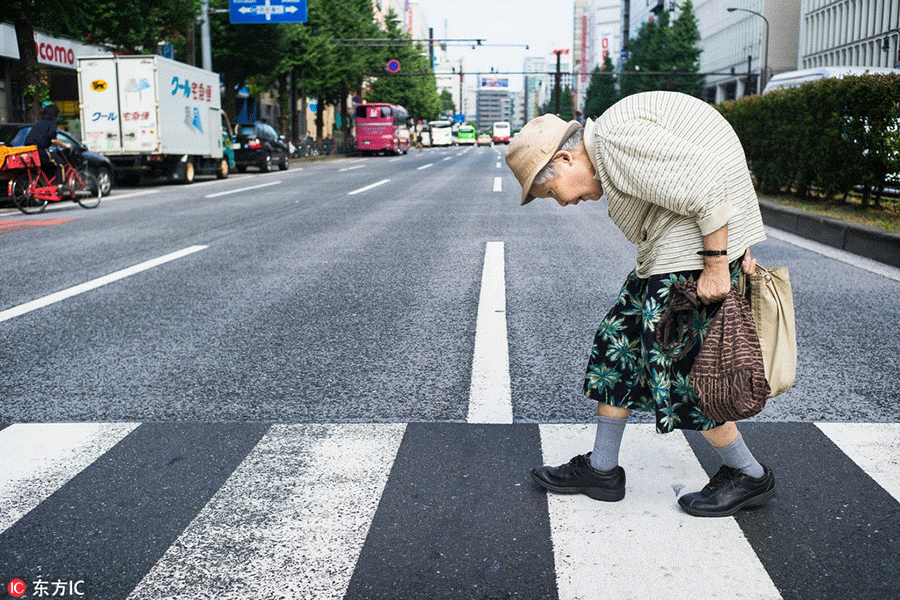
You can all envision the little elderly lady hunched forward and walking along looking at the ground – the only way for her to look up is to sit. It's hard for her to move, she has pain, but she's determined. This same little elderly lady will probably have breathing and heart function limitations because of the restrictions her distorted frame dictates to her organs now. It's a cautionary tale.
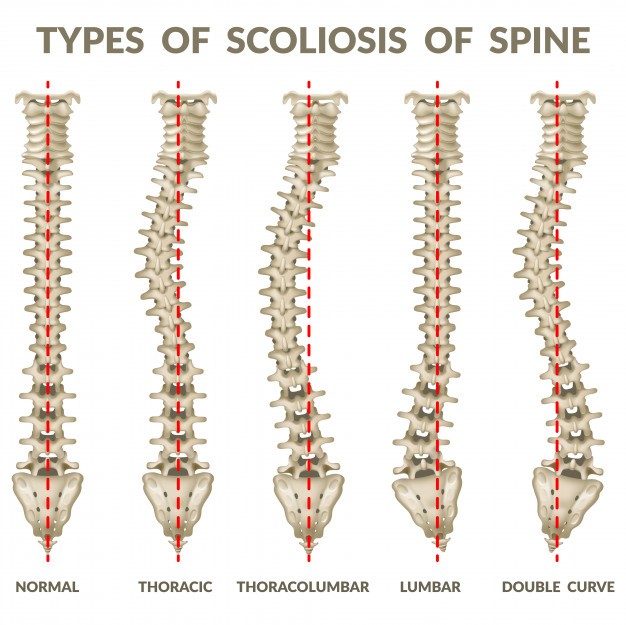
Then there's sideways curves. These can be caused by the same kinds of things mentioned above that shift the ideal curves out of plumb. However, the classic sideways curve of the spine you all will have heard of is scoliosis.
"Scoliosis" comes from the Ancient Greek word "skoliosis" which means crooked.
It is estimated that nearly 70% of the population have some degree of scoliosis. Mostly this is a functional problem (i.e. caused by the same issues mentioned above), but rarely it can be caused by the shape of the vertebrae being malformed at birth (congenital scoliosis happens to 1 in 1000 babies (1)) and is a more structural problem.
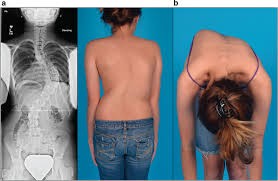
Classically, scoliosis is a sideways curvature of the spine. However, it can include rotation which results in a bulging of the ribs on one side when viewed from behind (this is the feature we look for when doing scoliosis screens of our early teens). Scoliosis often involves two sections of the spine and causes an amplification of the normal front to back spinal curves.
Adolescent Idiopathic Scoliosis (AIS) is the most common type of scoliosis affecting 2-3% of the population (2). Idiopathic means they don't know what causes it – more research needs to be done to define those details. AIS usually begins with the onset of puberty. Girls and boys develop AIS at the same rate, but girls are eight times more likely to need intervention to manage progression. Scoliosis is problematic if it is progressive as it can lead to permanent deformities, disabilities, heart, lung and neurological complications and lowered self-esteem, emotional distress pain and a shortened lifespan. The good news is bracing (tailored brace-like structure worn to promote more normal curves and prevent progressive increase of the curves) will stop curve progression in 72% of cases. According to "Shift Scoliosis" only 0.25% of children who have scoliosis require surgical treatment to stop these curves (1).
When the spine has the curves it's designed to work with, we know each of those spinal joints still needs to have full range of motion in order to have optimal function. We have spoken about this in several blogs (Stiffness and You've Got To Move It! Move It!). Normal joint movement provides sensory information back to the brain so the brain can pre-plan good movement patterns (The Predictive Brain). In terms of function and daily living with curves "beyond the norm", we know that compensation and adaptation leaves some parts of the frame not moving well. As chiropractors we are adept at helping to get curvy spines moving better, helping people be more comfortable and optimising their daily function.
Chiropractic care can help minimise the impact any AWOL curves are having on your quality of life. Spines are our thing. We check the pre-teens and teens for scoliosis and refer for further consultation when necessary. We work with the neuroplasticity of your brain to promote normal movement patterns. We look at your work situation to optimise posture and manage posture challenges where we can. We encourage people to be fit, strong and able to keep those joints moving well. We help people deal with chronic pain and the ways it limits ability. We give people the tools to manage and, hopefully, love their curves (or at least make peace and get along with them  ).
).
Give us a call at the Adelaide Chiropractic Centre on 8221 6262 and make an appointment now.