A wiggle in your walk...?
Reviewed August 2026
In a healthy pelvis, with good posture and balanced muscles, the biomechanics are arranged such that during walking (and running and stair climbing) the pelvis will remain square. There's some very strong muscles, collectively called the gluteal muscles, which make this possible, allowing the weight of the body to be transferred smoothly through the pelvis and legs to the ground as we move. Thus, in a strong, fit and able pelvis, you may see some bunching of the gluteal muscles as a person walks, but the pelvis wont tilt side to side like a person strutting in stilettos.
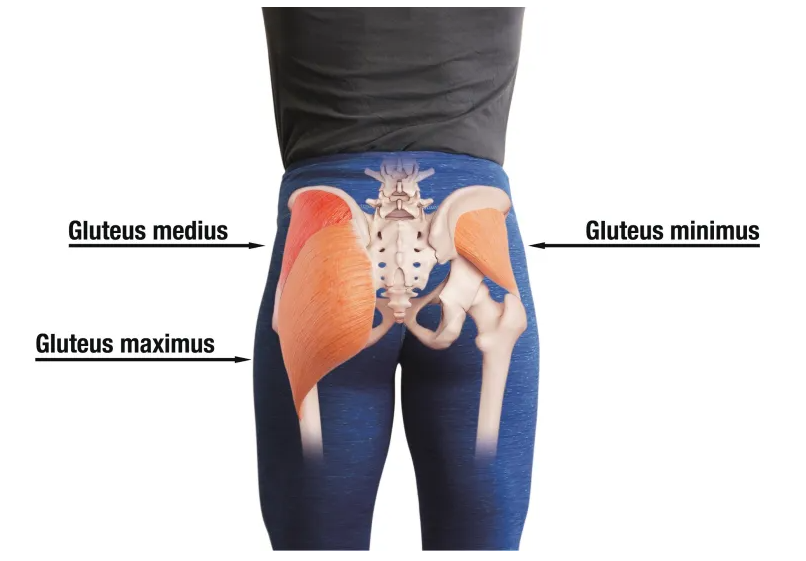
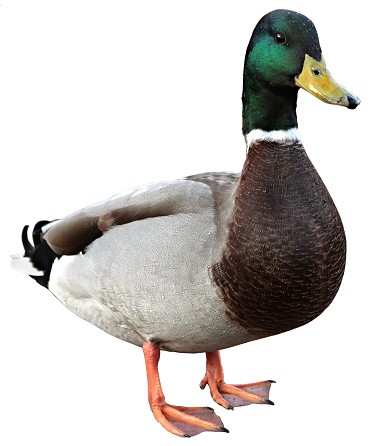
If a person's gluteal muscles don't cut the mustard, then the hip joints will internally rotate and the pelvis will anteriorly tilt ~ this person will stand with their bottom sticking out (like a duck!).
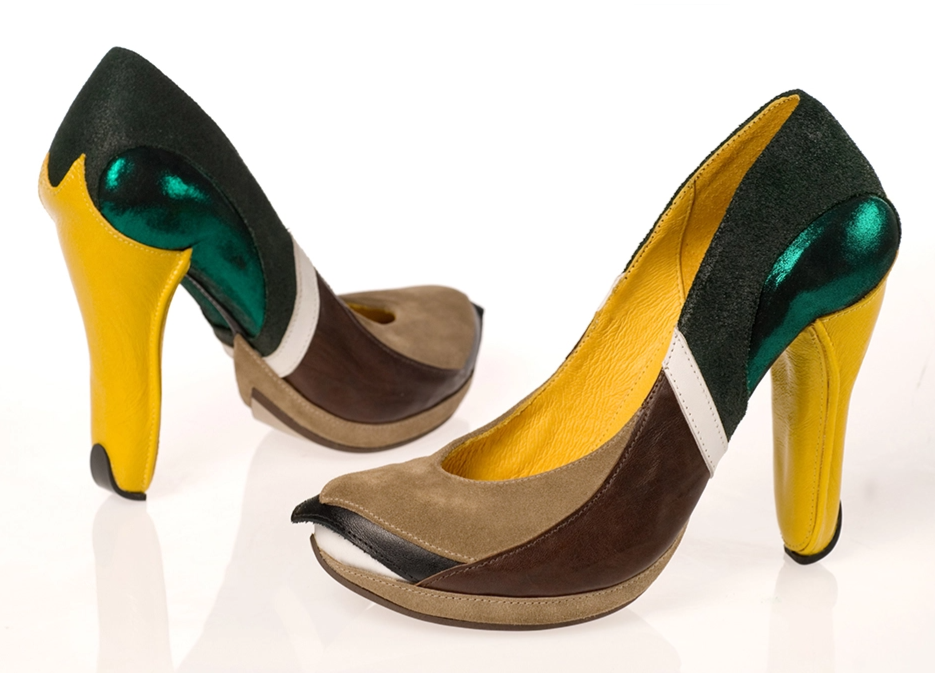
[It has to be said – this is the same position people stand in when they wear high heels...
this blog may illuminate why I advise people to wear high heels less...]
Incidentally, this can happen on one side and not the other, and the primary cause can be fixation in the joints of the pelvis or the lower back. It's a bit like the chicken or egg first conundrum in this way.
This posture means the weight of the body is not transferred through to the legs properly. There is a disproportionate load on the gluteal tendons where they insert laterally on the femur at the hip, and this can lead to gluteal tendinopathy.
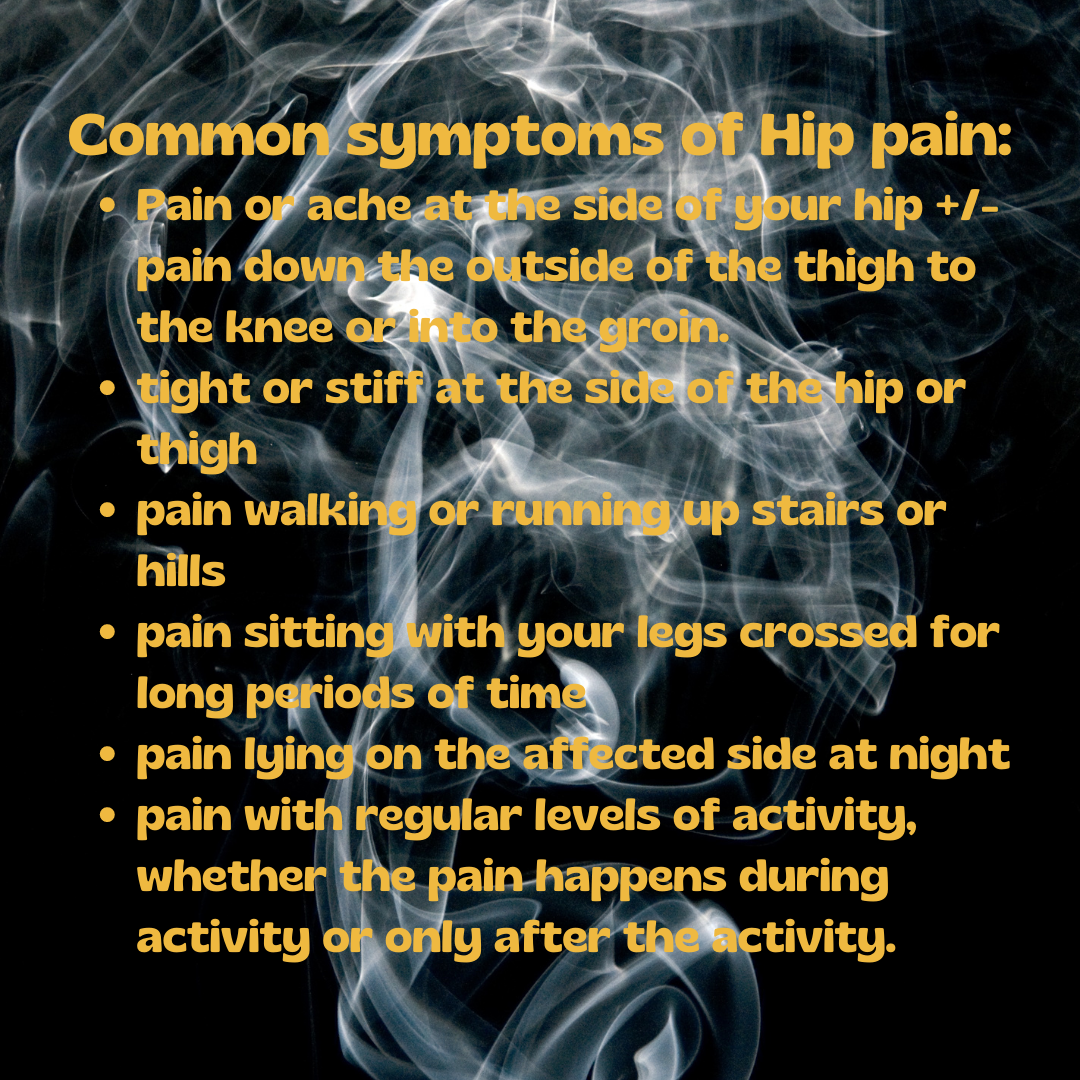
Gluteal tendinopathy is not the only cause of lateral hip pain, but it is the most common cause of lateral hip pain in women. Women are vulnerable to this due to the shape of the female pelvis (different to the male pelvis due to the needs of carrying and delivering babies), the shape of female hip bones and the hormonal changes a female goes through in midlife.
Studies show that 25% of perimenopausal women experience lateral hip pain.
~ this is especially so in active women.
Your gluteal muscles are rather magnificent. They do an awesome job of hip hinging so you can bend well (read more here) and they control the hip to keep us walking/running the way we're built to. Here's the dot point progression from great glutes to nasty lateral hip pain:
- In our modern sedentary world (lots of sitting for work, on the couch for leisure, and in the car) we don't do our glutes any favours. Through lack of use they become weak and it's then that the painless phase of gluteal tendinosis begins – concurrently we see the anteriorly tilted pelvis and the internally rotated hips manifest.
- It's at this point, after a period of inactivity (coming out of winter hibernation, returning to activity after having a baby or being ill, or beginning a fitness drive) there is a marked increase in intensity, frequency or duration of walking/running/stair climbing and the tendon becoming thicker and stiffer. The aches and pains begin.
- Next the poor biomechanics at the hip and the stiff gluteal tendons cause irritation to the gluteal bursa. The bursa becomes inflamed and sticky. Now we have "Hip Bursitis", the whole region moves even more poorly and the lateral hip pain ramps up.
Bursitis means "inflammation of a bursae".
A Bursa is a pillow of fluid that sits between a tendon and a bone to prevent rubbing and wear of the tendon as it travels across the bone.
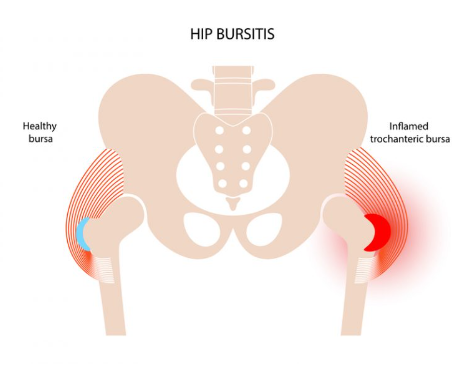
Hip Bursitis is often referred to as the "cause" of gluteal tendinopathy. As you can see in the natural progression of the disorder described above, hip bursitis is actually one of the sequelae of gluteal weakness and gluteal tendinopathy.
Cortisone (steroid) injections into the hip bursa are the traditional solution for hip bursitis. The idea is that the steroid has an anti-inflammatory effect and helps the bursa to heal. Unfortunately, steroid injections are often given as just a band aid, as reducing inflammation is just dealing with one symptom of gluteal tendinopathy. It may reduce the pain, but it does not actually deal with the tendinopathy. In this situation it is most likely the same pain will return after a variable period of time (days, weeks, months). The solution proffered when the lateral hip pain returns (because the gluteal tendinopathy is still there to irritate the bursa) is often a second cortisone injection ~ and we also know that multiple cortisone injections have been shown to cause further deterioration in the gluteal tendons and perpetuate the problem. Not ideal.
Take heart, you can resolve gluteal tendinopathy! However, it does take time and effort.
Tendons heal slowly. Specific progressive strengthening exercises designed to work the local muscle and improve the mobility of the tendon is the only way to heal tendinopathy. It takes 4-6 months. There is no life hack around this. No short cuts.
It is worth noting that a steroid injection into the inflamed bursae can be used to create a pain free window to perform this rehabilitation of the gluteal muscles and tendons. I would argue that working on this issue when the wiggle is first noticed is the better option. Prevention is so much better than cure...and you get to dodge the pain!
We need strong gluteal muscles to hip hinge, bend and lift properly without doing damage to our lower back. It's worth keeping ourselves strong fit and able ~ gluteal tendinopathy is a classic example of what happens when we don't.
The lower back/pelvis/hip region is complicated. A variety of the structures in this area can be the source of lateral hip pain including (but not restricted to): the low back joints and discs, the sacroiliac joints, the ligaments of the pelvis, the actual hip joint itself, the iliotibial band and the knee.
Actual pain from the hip joint most commonly presents as pain in the front of your hip (groin, top of thigh). Dysfunction in the SIJ, gluteal musculature and hip will all cause the lower back to work harder and often present initially as lower back pain.
Back to the wiggle for a moment - gluteal tendinopathy and other pains in the hip region can of course be one sided or involve both sides. One sided, this can look like a lurch in your walk or a hitching of one side of your pelvis as the leg on that side "just doesn't swing right". This comes in two varieties ~ with and without pain. Some may think a wiggly walk enticing, but a wiggly walk caused by disfunction in your musculoskeletal frame is rarely elegant or graceful.
It's worthwhile consulting a musculoskeletal specialist (Chiro, Physio) to clarify your personal hip pain and get an individualised tailored plan to assist you in your recovery. Having your pelvis aligned will promote optimal function of all of these structures. Give us a call at the Adelaide Chiropractic Centre on 08 8221 6262 and make a time with one of our chiros to have a conversation about your lateral hip pain now.
P.S. High heels really are a bad idea.