
Headache
Reviewed August 2026
The International Headache Society (IHS) has classified over 200 types of headache in their "International Classification of Headache Disorders – 3" (ICHD-3)(2), but broadly speaking, they fit into 3 categories and 12 sub-categories (you can see the whole list here: https://ichd-3.org/classification-outline/ ...it is truly a stonker of a document!).
The first of the ICHD-3 classifications are the primary headaches. Primary headaches are the most common and are, in themselves, the root cause of the problem (compared to secondary headaches which are a consequence of some other initial dysfunction ~ an example of this would be getting a headache because you banged your head on a wall, which would be considered a headache secondary to head trauma...incidentally, that falls into category 5.1 through 5.4 (2)). The primary headache categories include migraine and Tension Type Headache (TTH) which are the headache types that the average person will most commonly experience in their lifetime.
Migraine
The IHS cites the 2015 Global Burden of Disease report that states that migraine is the third most prevalent disorder in the world in both males and females under 50 (2). Migraines often begin in childhood, get worse through the teenage years, and become rare after the age of 50. More boys than girls have migraines, but more adult women than men have them(4). There are two major types: migraine with or without aura.
Typical migraine symptoms include: pain on one side of your head that is worse when you move; sensitivity to light, smells, sound, motion, touch (so you want to curl up in a dark and quiet room); blurred vision; nausea and vomiting; neck and upper back stiffness, yawning and crankiness. They can last 4 to 72 hours.
Aura causes a person to experience visual symptoms ~ coloured spots or flashing lights, zigzagging lights or temporary loss of part of your vision. It can be really scary the first time you experience it. About one in three people who suffer from migraines get an aura with it, but the aura might not happen every time (so a person can get both types of migraines...and it's possible to get the aura without the headache, but unfortunately, in this scenario, the person still suffers that "headache hangover" after the event).
Over the years there have been many theories as to what causes migraines. The scientists still don't know ~ they have a pile of puzzle pieces, but haven't managed to determine the full picture yet. The current theory revolves around the idea that a wave of nerve cell activity in the brain excites the trigeminal nerve (one of the cranial nerves) causing a release of neurotransmitters and resulting in an inflammatory change in the brain which triggers pain.
Tension Type headaches (TTH)
TTH have a lot of names in the literature. They are also known as: tension headache; muscle contraction headache; psychomyogenic headache; stress headache; ordinary headache; essential headache; idiopathic headache; psychogenic headache (2).
The IHS states that TTH is extremely common, in the general population any person has a 30-78% chance of experiencing a TTH in their lifetime (2). The WHO states TTH is "the most common primary headache disorder"(1). It has a huge socio-economic impact on the world as severity can range from "just aware of the headache, it's not stopping me from doing anything I want to do" to "completely debilitating, can't do anything, it's excruciating". TTH often begin in a person's teens and affect women to men in a 3:2 ratio.
Typical symptoms of a TTH: the head pain is describes as a pressure, tightness or tension; there is associated tenderness to palpation (touch) of the head and neck muscles. TTH can be episodic lasting a few hours or, at worst, a few days. TTH can also be chronic, which means that they are unremitting and continuous and much more disabling.
The reasons people experience and the mechanisms involved in developing TTH are still not completely clear. We know that there are two facets: biomechanical musculoskeletal elements in the neck; and what the IHS calls psychogenic elements. The latter is colloquially known as "stress". In TTH physical, mental and emotional stress can all play a role in contributing to the headache.
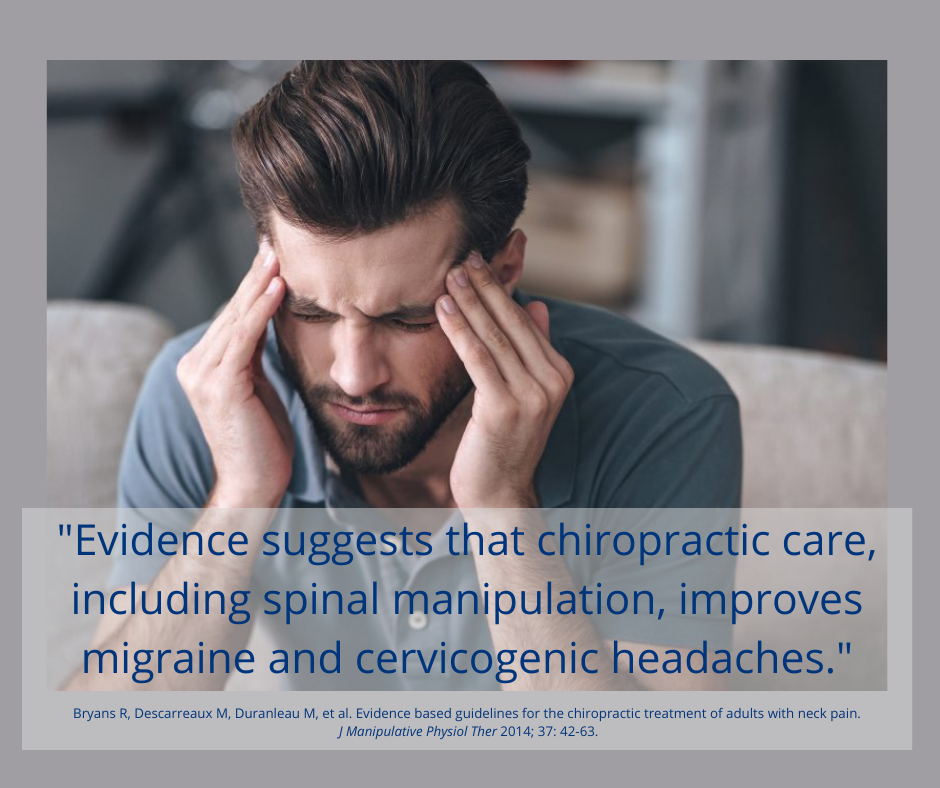
As a chiropractor I work with many people who suffer from headache. In simple terms I see a person experiencing a headache as analogous to the Charles Dicken's poor camel whose back broke because some schmuck placed just one more piece of straw on its back. When it comes to a headache, the schmuck is often the person experiencing the headache themselves. From parables to children's stories ~ Have you ever read "Who Sunk the Boat" by Pamela Allen? It's not the bigger animals, it's not the mouse, but everything together that tipped things over the edge.
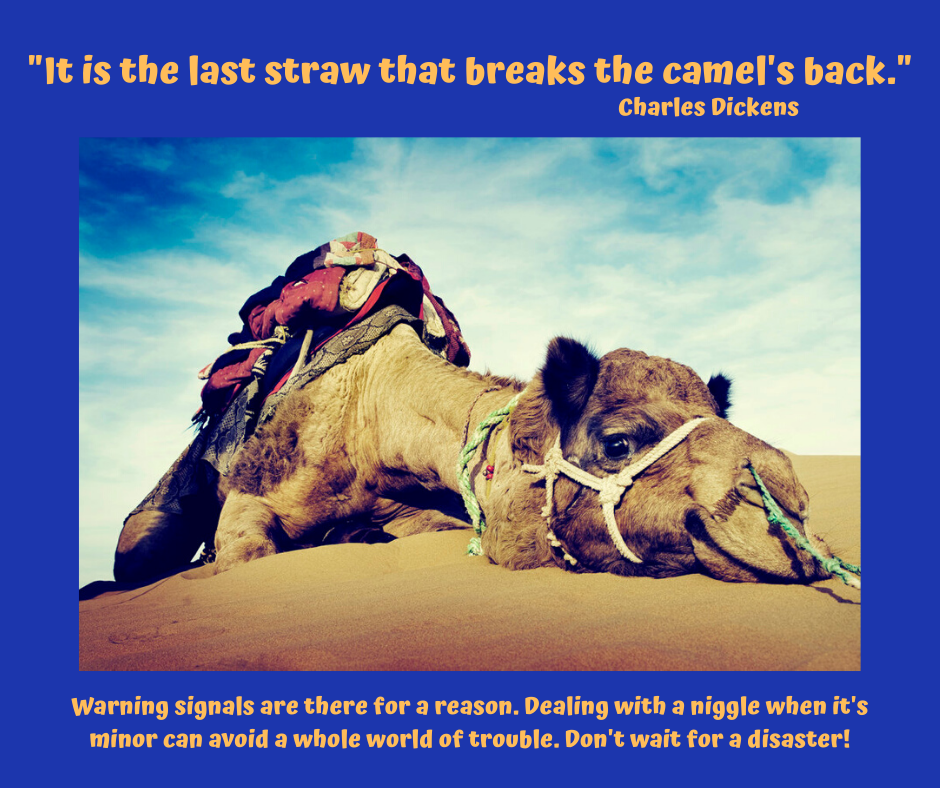

My job as a chiropractor is to improve the spinal biomechanics contributing to the headache and also to help identify as much of the straw as possible (or beasts...depending on the analogy that spoke to you most) with the goal of shifting the headache sufferer as far away from the headache threshold as possible. This with the aim of decreasing the intensity and frequency of headache and, ideally, knocking them out entirely.
The straw/beasts can take the form of a myriad of different kinds of stress (physical, mental, emotional), postural issues, work place ergonomics, and wellness hygiene habits (sleep, diet, exercise, headspace). We identify what's relevant and then develop plans to mitigate the issue and where I don't have the tools to do so, I will refer the person on for the appropriate help.
As I mentioned at the start of this piece, the IHS has categorised over 200 types of headache. A very few of them are dangerous and need immediate medical attention. So please, if someone has any of the following symptoms with their headache they must seek emergency medical attention:
- Abrupt, severe headache
- Headache with fever, stiff neck, mental confusion, seizures, double vision, weakness, numbness or speaking difficulties
- Headache after head injury, especially if the headache is getting worse.
References
-
https://www.who.int/news-room/fact-sheets/detail/headache-disorders#:~:text=Half%20to%20three%20quarters%20of,of%20the%20world's%20adult%20population. (viewed 14/2/21)
-
https://ichd-3.org/ (viewed 14/2/21)
-
https://headacheaustralia.org.au/what-is-headache/prevalence-and-cost-of-headache/# (viewed 14/2/21)
-
https://webmd.com/migraines-headaches/migraine-auras-explained (viewed 14/2/21)
-
https://headacheaustralia.org.au/headachetypes/tension-type-headache/ (viewed 14/2/21)