
The Marvels of Myelin and Movement
Reviewed August 2026
Neck control ~ when the baby is first born there is no control of the muscles in the neck and we must always provide support here as their head is so heavy (it's that amazing big brain humans have).
Recognising their own hands and grasping things with intent (so, not the reflexive closing of the hand over your finger they do as newborns).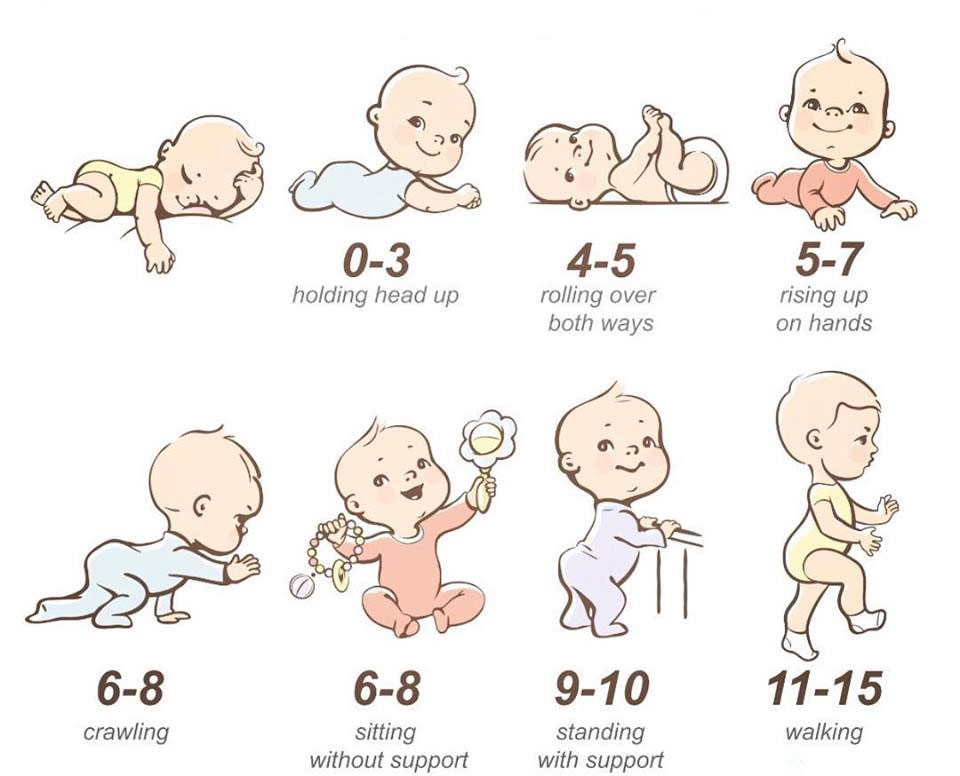
Rolling over, first one way, then both, then they're never where you put them down anymore.
Sitting ~ first non-dynamic (will fall over due to gravity or an outside force, need to be propped in place and cannot self-correct yet) then dynamic (can self-correct and return self to sitting if they lose vertical for any reason).
Locomotor Frustration ~ on all fours, but rocking forwards and backwards and not crawling yet, and quite miffed about it, thank you very much.
Crawling ~ and baby-safing the house begins...
Cruising along the furniture ~ practicing standing and full weight bearing vertically, but not strong enough or coordinated enough to broach walking without couch-aid yet.
Walking ~ "controlled not-falling", followed by a discoordinated toddle and then zooming!
So how does the developing nervous system first limit and then facilitate this progressive pattern of movement?
We often colloquially describe the messages that travel within our nervous system as electricity. That's actually less of an abstract idea than you'd think. When you get down to the nitty gritty, ions (like sodium ions, Na+) migrate through the nerve cell wall in such a way to create a moving action potential which travels the length of the nerve and, in doing so, conveys a message to the next nerve cell up or down the line ~ voilà electrical messages.
When we plug an electrical appliance into a power outlet in our house, we know the power cord needs to be insulated else the electrical charge would disperse into the air (or into a person giving them a shock) and not travel along the cord to power the appliance. The action potentials travelling along our nerves are the same – an insulative layer is required to stop the charge frittering away into the surrounding tissues.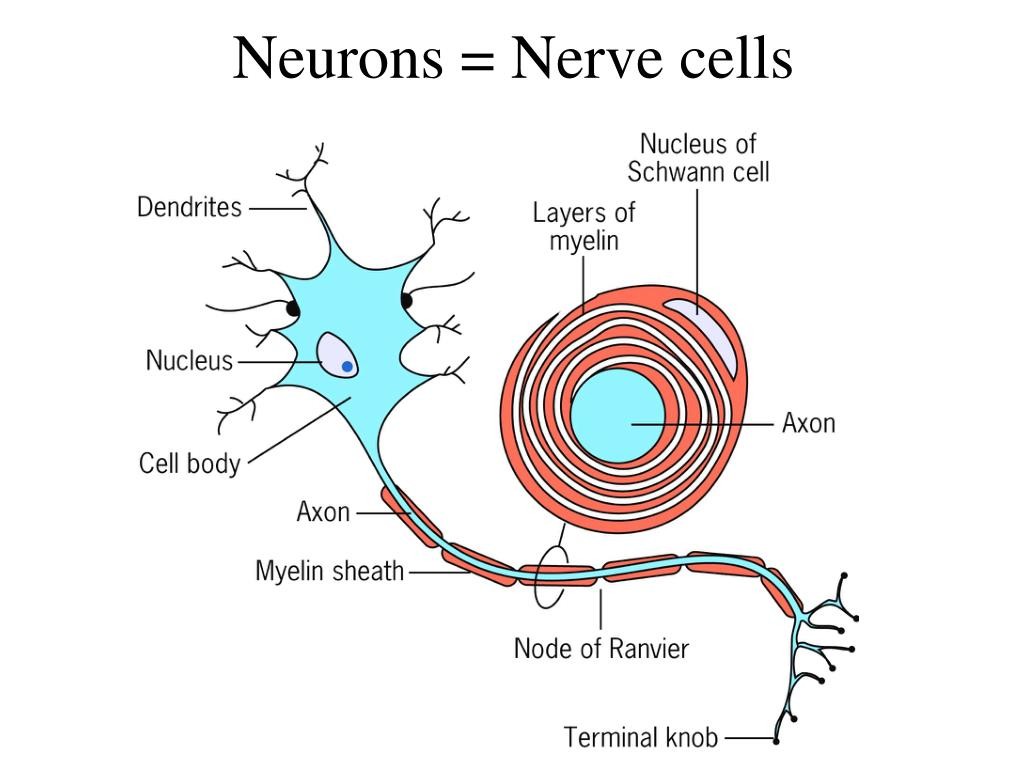
In the human body the insulation keeping action potentials travelling in the nervous system is provided by myelin. Myelin is produced by Schwann cells in the body (in the brain it is made by oligodendrocytes). These cells create a sheath of membrane that wraps around the axon of nerve cell (neuron) multiple times creating an insulative layer which promotes nerve conduction (i.e., making sure the messages travel from one end to the other).
"The amount of myelin in the body increases throughout development, from foetal development up until maturity, with the myelination in the prefrontal cortex being the last to complete in the second or third decade [the prefrontal cortex is the part of the brain used in judgement and reasoning]. The more myelin and myelination an individual has, the quicker their response to stimuli because the myelin sheaths increase the speed of the nerve impulses. Think of a baby that is still learning to walk – their response to a stimuli is slow and uncoordinated compared to a child, teenager, or adult. This is partly because of myelination of axons during infancy is still progressing." (3)
When the baby is born the whole marvellous nervous system is in place, but there is no myelination of the nerves that travel between the brain and the skeletal muscles (the muscles that move our body around). This means that even if a newborn knew it wanted to move its body, it couldn't because the messages from its brain would fritter away into the tissues in between as there is no myelin insulation surrounding the nerves which tell the muscles what to do at that stage of development.
With respect to movement and the motor system, myelination in the peripheral nervous system (i.e. outside the brain) begins around birth and starts in at the base of the brain in the neck. It then progresses from the base of the skull down to the bottom of the spinal cord and out into the body at each level. This is why the baby's physical abilities (or motor milestones, as the paediatricians call them) develop in order from neck to feet. They get control of the muscles of their body in that particular order: neck control, arm control, torso control, pelvis, legs, feet. They still need to practice, practice, practice, but with the insulative myelin sheath in place control and then finesse will come. It's such a delight for me with each little one I see grow through this process. The nervous system is just amazing!
We can help our little ones gain control over their bodies, and develop the strength in their muscles that they need, by guiding their practice appropriately at each advancement of the nervous system. In this way they will meet their motor milestones with grace. I just want to touch on a few.
The first point is building neck control to balance their heavy head. We must always support baby's head when they are tiny and then promote tummy time religiously. Yep, they do not like it. Do you have a memory of working on your fitness or a physical skill at some point in your life when you really didn't want to? I'll bet you were NOT impressed with your teacher or coach when they insisted you persist...and had quite a bit to say about it sotto voce or on the inside...and may have gone so far as to avoid the practice...? Hmmm? Is it any surprise that the baby kicks up a vociferous fuss when you have them on their tummy for a bit – that ginormous head is really heavy you know, and their muscles have to build stamina and strength with time and use. I'm afraid it's one of those "just do it" scenarios. Make it part of the routine and make it fun by getting down on your tummy with them and looking them in the face or having them lie on your chest and look at you. Putting them tummy down on a fit ball that's sitting stabilised between your legs while you sit on the floor is a good one too.
Crawling (not commando crawling – that's the epitome of "I will move myself around! I will not let the fact my neurology hasn't developed fast enough to meet my determination to move stop me!! It often happened with second and subsequent children who want to keep up with older siblings...) is a really important motor milestone. Here it's not just about the progressive myelination of the peripheral nervous system and practice. It's also about developing the ability for cross coordination between the two hemispheres of the brain. Very, very important developmentally. Crawling is fantastic and should be encouraged. Get down on the floor and crawl with them. Make it fun.
It's important not to rush a baby into walking. Let them cruise on the furniture at their own pace. In this stage their myelination is still extending towards their feet. They're still progressively gaining control of their legs, developing coordination and gaining strength in their muscles to maintain a vertical posture. They'll walk soon enough, and then there will be no stopping them!
On a very different note, I can't talk about myelination and not mention Multiple Sclerosis (MS). This is the very sad, difficult and awful other end of the spectrum. There are a variety of demyelination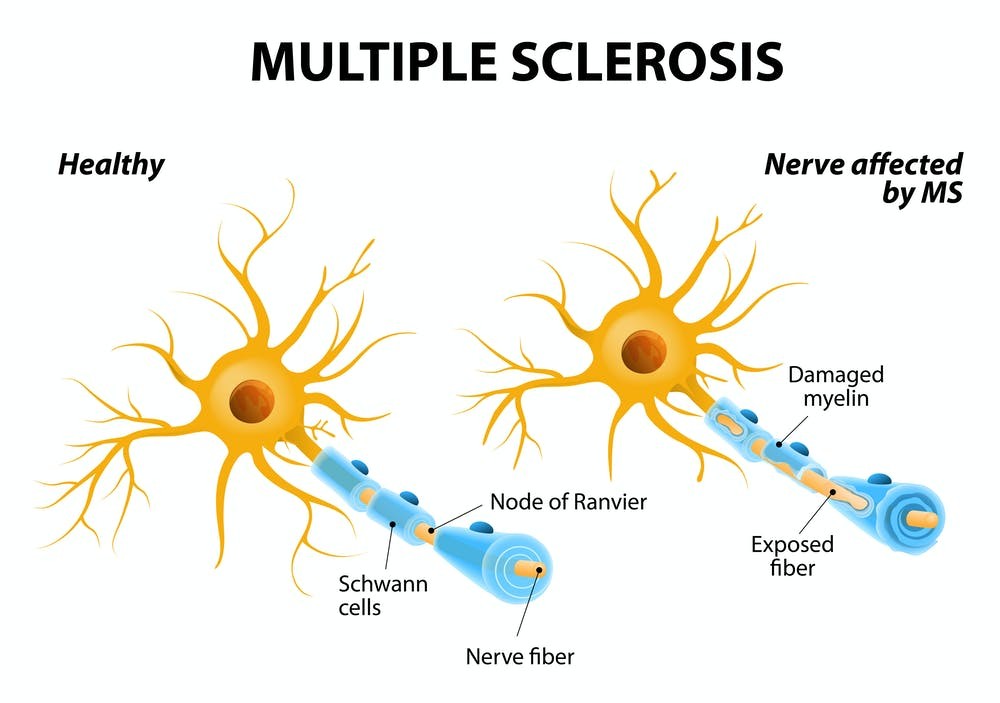 diseases, but MS is the most well known.
Demyelination is the process by which the myelin sheath around an axon can be destroyed or lost. This can happen because of a disease process like MS. It can also be caused by some medical treatments such as chemotherapy and radiotherapy (3). When preexisting myelin sheaths are damaged or lost then nerve conduction is slowed or blocked as the action potentials fritter away from the unmyelinated nerve axon and into the surrounding tissues.
MS is an autoimmune disease where the myelin sheathes of the nerves in the brain (remember, in the brain the myelin is made by oligodendrocytes) are progressively degraded over time. "Patients with MS develop various symptoms including visual loss, cognitive dysfunction, motor [muscle] weakness and pain" (2). If you'd like to find out more about MS please explore the following links:
So, as you can see, oligodendrocytes and Schwann cells play a very important part in the symphony orchestra of cell action that our body plays each and every day to allow us to do the most simple little things. Insulation is important! It makes me smile every time I see a baby progress from one motor milestone to the next...and think about the insulation growing down their little bodies. Yes, I know that might seem a little weird, but it just depends on your perspective. I like nervous systems.
References
-
K Bentley (Occupational Therapist) "Early Development of Core Muscle Tone in Babies" 2018 https://www.kidsot.com.au/early-development-of-core-muscle-tone-in-infants/ (viewed 7/2/21)
-
K Susuki (M.D. Ph.D.) "Myelin: A Specialised Membrane for Cell Communication" 2010 https://go.nature.com/2O8WMgh (viewed 7/2/21)
-
A Osika and F Salvador, "The Myelin Sheath and Myelination" 2020 https://www.kenhub.com/en/library/anatomy/the-myelin-sheath-and-myelination (viewed 7/2/21)