
Marvellous Multifidii
Reviewed August 2026
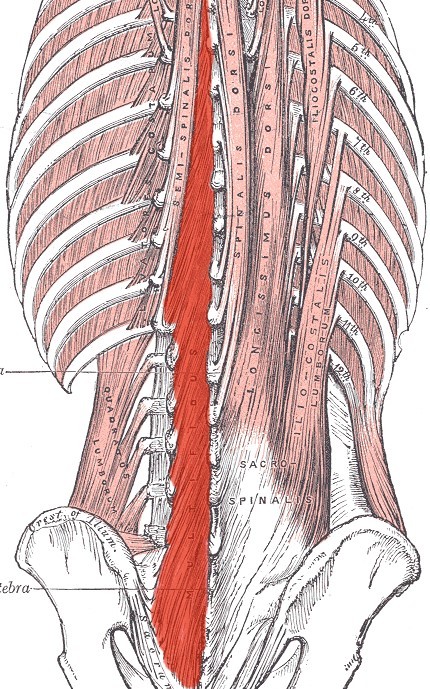
There are over 40 structures (bones, muscles, cartilage and ligaments) that make up the spine. It's marvellously complicated, and that's before we add the neural elements!! Today we're focussing on the Multifidii. The Multifidus muscle runs the whole length of the spine, but is most developed in the region of the lumbar spine (the bottom 5 vertebrae, your lower back).
Mutifidus muscle is a collection of tiny deep muscles that run from the sacrum/posterior superior iliac spine (PSIS) of the pelvis/and transverse processes of the vertebrae to the spinous processes of the vertebrae 2-4 levels above. They also connect to your transverse abdominus muscles via the thoracolumbar fascia.
These little muscles extend and rotate our spine. They are active continually in upright postures. They also stabilise our spine by working with the transverse abdominus and the pelvic floor muscles as we move. The multifidii are said to be very strong for their small size due to having a relatively large cross section compared to their length or the distance they act over.
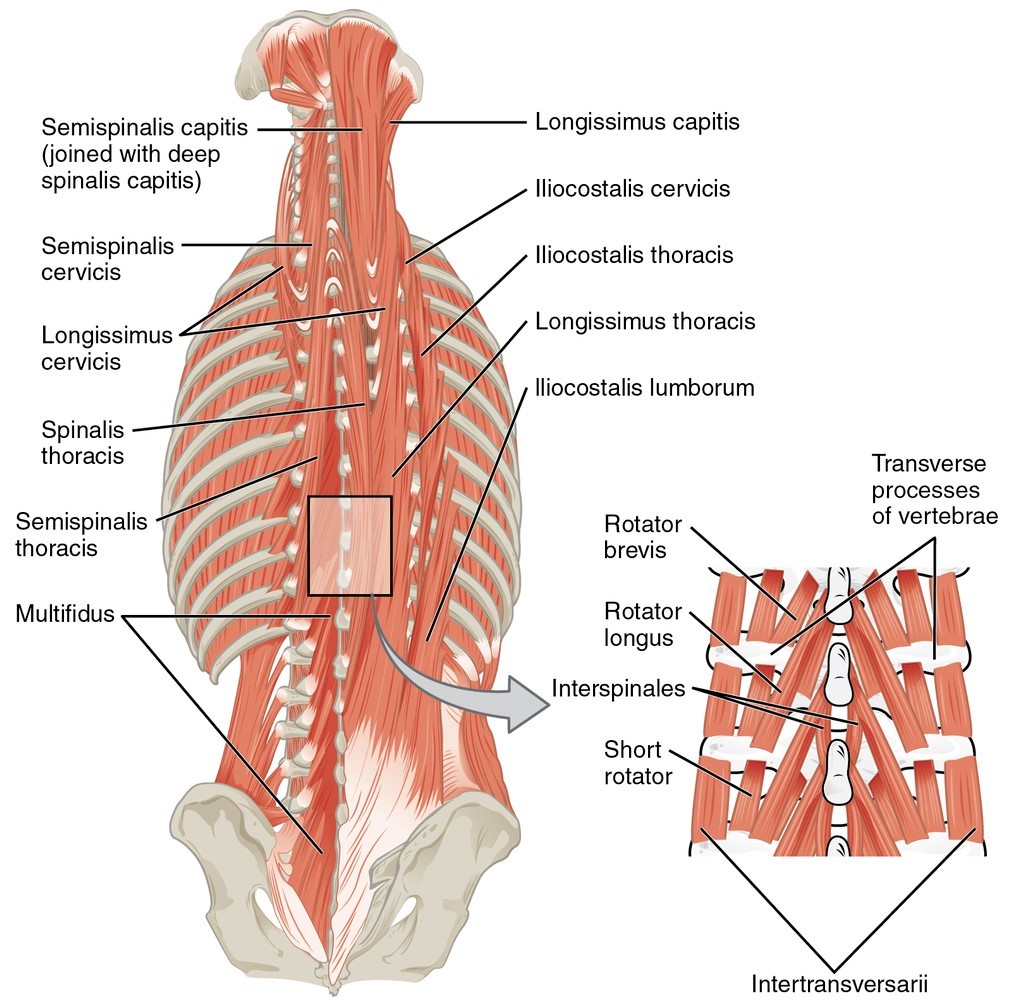
Multifidii play an even more important role, one that muscles are not commonly known for ~ they act as a sensor. An end-organ that provides vital data back to the brain regarding the position of the joint it is bridging in the spine. The multifidii provide this constant metronomic data via the nerves to the brain through every moment of the day and night. The brain takes that metronomic data from the multifidii (along with other joints) and creates a map of where your body is in space. It then uses that map to pre-plan your movements and coordinate muscle action throughout the body to conduct smooth, safe, balanced movement. Pretty cool!
Through this combination of actions, the multifidii allow for adaptability and resilience in the spine. Another way to say this is that healthy multifidii make for you being able to deal with the unexpected (like catching a 3 year old who just launched themselves off the back of the couch at you with great glee and trust; or being able to unexpectedly step down a gutter and jolt your body; or being collected mid-air by a tackle while playing football) with less chance of injury.
So, why am I going on about these marvellously mighty mini muscles?
- Research shows that a sedentary lifestyle (spending large portions of your day not moving (read more here), such as that common in Australia today, leads to deterioration in the quality of the multifidus muscles (multifidii atrophy), and
- Research is very clear that poor quality mutifidii is closely associated with back pain.
The first research that established a link between multifidii atrophy and back pain was done in 1993. This is not new information and there have been reams of research performed since which have confirmed and clarified our understanding of this link. A few points to note from this extensive research:
- The severity of multifidus atrophy on MRI is directly correlated with decreased ability to bend forward and back pain.
- Disc degeneration on MRI is associated with bone changes and multifidous muscle atrophy indicating a "whole organ" pathology.
- The fatty composition of the multifidous muscles in back pain is directly correlated to poor physical function.
The changes in mutifidii quality can be seen very clearly on MRI imaging of the lower back.
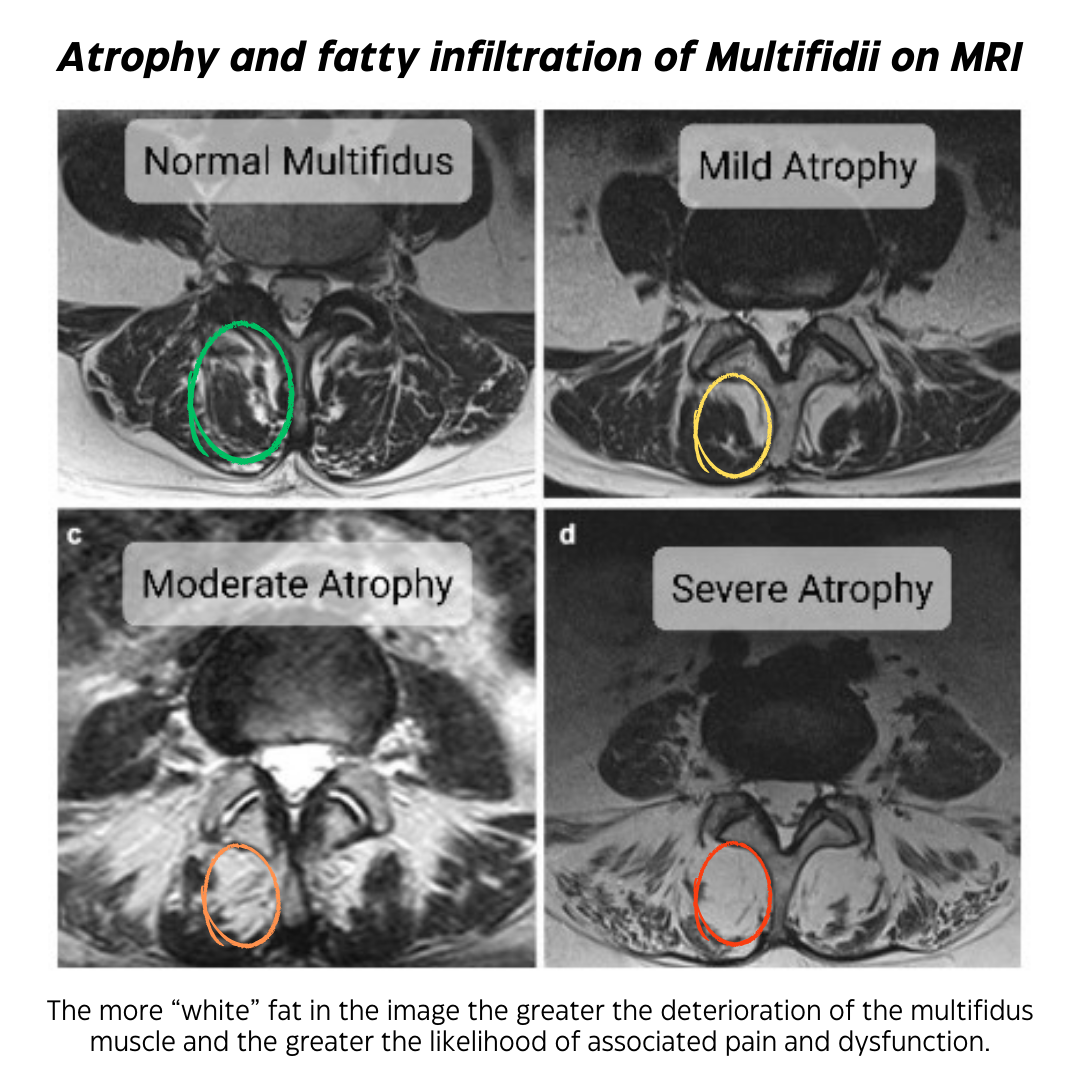
So, without the jargon ~ when the multifidii deconditions (often caused by too much sitting/sedentarism or an injury) other parts of your back have to pick up the load and that's when pain starts; multifidii deterioration is closely linked to disc degeneration, especially in your lower back; and it can become a vicious cycle of pain > less movement > muscle loss > less support for your spine > more pain!
There is, however, good news ~ you can break the cycle!
What you can do:
- Keep Moving!! Walking (read more here), gentle core exercises and targeted stretching can help to activate and strengthen your multifidii.
- Get help early. A chiro or physio can help to identify weakness before it becomes a bigger issue and guide you with specific exercises.
- Sit less, move more!! Your multifidii (and the rest of your body) loves variety. It doesn't need a bootcamp, just regular reminders that it has a job to do.
Just remember, while I've spoken about the musculoskeletal role the multifidii play in this blog, you want healthy multifidii for more than one reason.
You also want healthy multifidii as the sensors that keeps your brain informed regarding kinesthesis and your ability to be physically resilient to what the world might unexpectedly throw at you. When multifidii are not firing in this way the brain will not be clear on where the joint is in space and will make all the long strap muscles in the region switch on making you feel stiff (read more here). Chiropractic care has been shown to get the multifidii talking to the brain again, and with good data the brain will always endeavour to bring the body back towards normal function.
References
-
https://www.healthdirect.gov.au/lumbar-spine
-
https://www.physio-pedia.com/Lumbar_Multifidus
-
"Association Between Lumbar Disc Degeneration and Lumbar Multifidus Muscle Fatty Atrophy in Patients with Chronic Low Back Pain: A Prospective Observational Study" Dr A Rajesh et.al. https://www.ijsdr.org/papers/2405178.pdf?utm
-
https://urbanspinejoint.com/2025/04/07/correlation-of-chronic-lower-back-pain-with-atrophy-of-the-multifidus-muscles-on-diagnostic-imaging/?utm