
Osteoarthritis
Reviewed August 2026
There will be more osteoarthritis (OA) in the future mostly due to two factors: the population is ageing and obesity is on the rise worldwide.
According to the United Nations:
"...by 2050 people aged over 60 will account for more than 20% of the world's population. Of that 20%, a conservative estimate of 15% will have symptomatic OA, and one third of these will be severely disabled." (1)
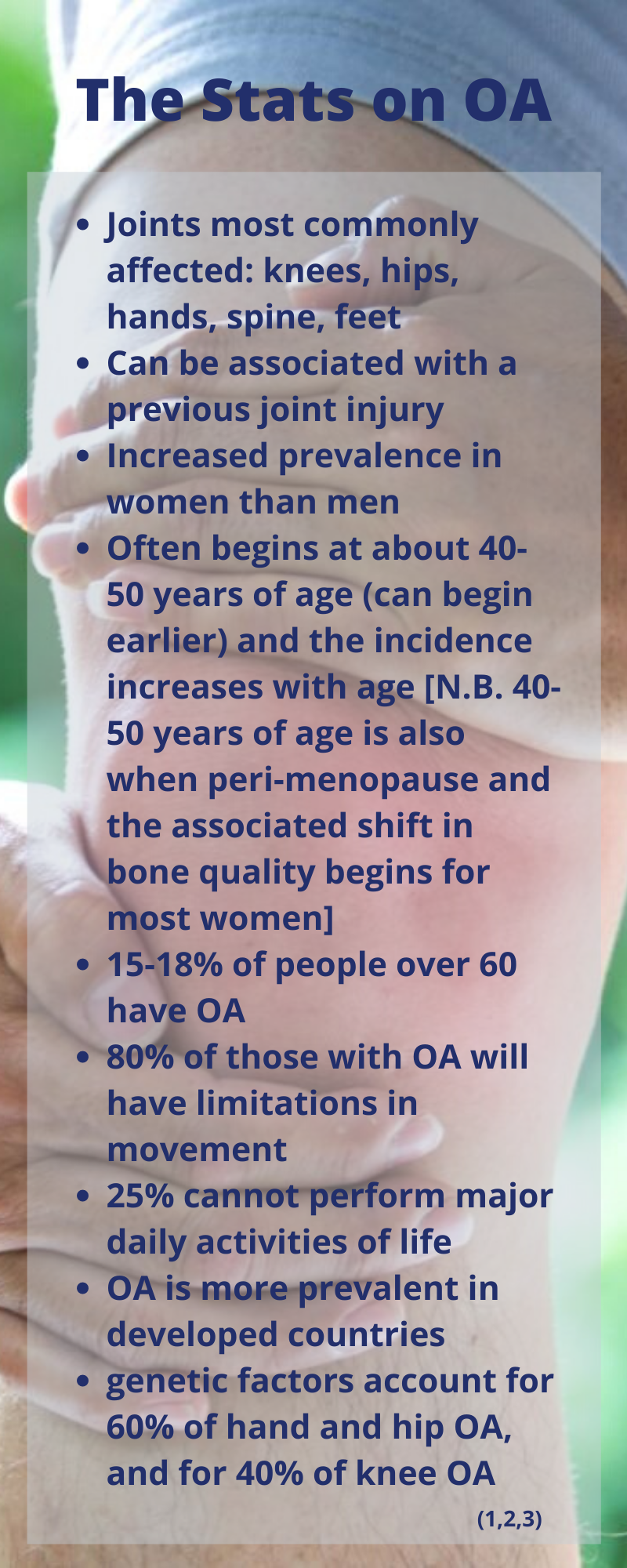 OA is one of the most common joint disorders worldwide. OA is often described as "wear and tear" in the joint, but new thinking proposes it is caused by healing processes in the joint being overwhelmed by destructive processes (4,5). The mechanism of the joint change in OA is believed to be multifactorial, including: oxidative damage, thinning of cartilage, muscle weakening and a reduction in proprioception (joint position sense) (2).
In joints with OA we see degeneration and thinning of the cartilage with subsequent changes in the shape of the joint and growth of bony spurs (where the brain is trying to stabilise the joint, but the spurs can be a problem themselves). There can be less lubrication in the joint which makes them stiff. A persistent low grade level of inflammation (chronic inflammation) can cause the joint to be red, swollen and painful. As movement decreases the muscles bridging the joint may become weaker through lack of use and reduced feedback from joint proprioceptors to the brain. This muscle weakness contributes to decreased joint stability and makes the whole structure vulnerable to mechanical aggravation.
The classical testing procedures used to quantify musculoskeletal diseases are not very useful in OA. Medical imaging (xray, CT scan, MRI) can show either normal looking joints when the person has awful pain or spectacular joint changes when the individual has no symptoms or anywhere in between. Radiographic findings and clinical symptoms just don't go together with OA. Statistically speaking "only 40% of patients with moderate radiographic knee OA and 60% of those with severe OA have symptoms" (2). Blood tests are only useful to exclude other types of arthritis.
David Butler (Physiotherapist and lecturer at Uni SA) refers to OA as "kisses of time". As time goes by we will all accrue some of these joint changes in our bodies. In some bodies these changes will have little impact on our quality of life. In others there can be significant pain and decreased quality of life. Palazzo et. al. state that "OA is the 11th cause of disability in the world. It causes a restriction in activity, particularly walking, and affects participation in the world and quality of life."(2) The WHO goes on to say, "80% of those with OA will have limitations in movement and 25% cannot perform their major daily activities of life."(3) Statistically: having knee or hip OA reduces life expectancy (walking disability appears to be the main risk factor in this); and OA is associated with an increased risk of premature death from cardiovascular disease (2).
These are scary thoughts, but what determines whether a joint will develop OA?
There are many factors that contribute to both the magnitude of the joint changes and the potential severity of symptoms or disability seen in OA. Palazzo et.al.(2) divide these risk factors into two categories: person level factors and joint level factors.
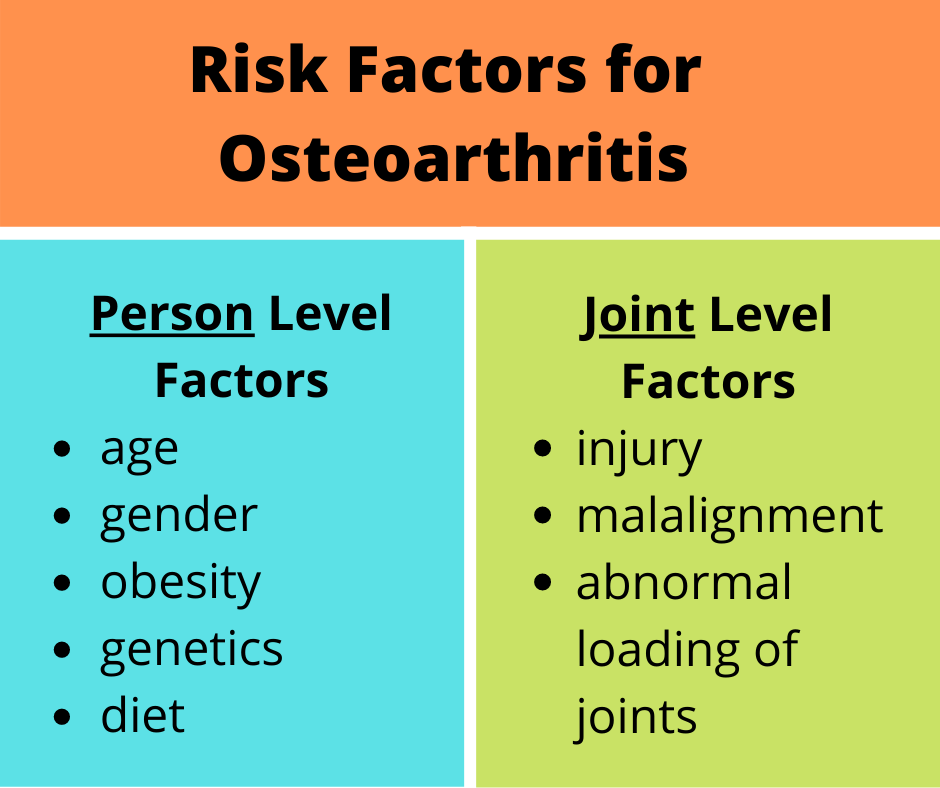
Age, gender and genetics we have no control over, but we can modify the rest, and this is where the management strategies come into play with OA.
Obesity impacts on the health of our joints by increasing biomechanical stress on the joints with increasing weight (as is seen in knee OA particularly). There is also a link between obesity and hand OA though, so we can extrapolate that obesity also contributes to metabolic changes and inflammatory systemic effects which also impact joint health. The exciting detail that comes from research around obesity and OA is the estimation that "weight reduction by 5kg decreases the risk of developing knee OA by 50%" (2). Weight reduction in overweight people with OA also decreases the severity of their symptoms.
Diet. Early on I mentioned that oxidative damage was one of the factors that contribute to the joint changes found in OA. "Oxidative damage" is what happens when a body is full of chronic low grade inflammation – or in a pro-inflammatory state. I discussed this process and what it can do to a body in a previous blog called "The Anti Inflammatory Diet" recently. I'll redirect you to that blog for the details on how to decrease oxidative damage in your body and decrease the impact of chronic diseases, including OA, by making easy tweaks to your diet.
Empirically joint injury increases the propensity towards OA of the same joint with time. However, research on this correlation has mostly been done on the knee. The data on the knee shows: rupture of the anterior cruciate ligament causes early onset knee OA in 13% of cases after 10-15 years; ACL rupture plus damage of other structures in the knee joint (cartilage, subchondral bone, collateral ligaments and or menisci (which happens in 65-75% of ACL injuries)) increases the incidence of knee OA to between 21% and 40%; surgical repair of the ACL increases joint stability, but doesn't decrease the incidence of OA; surgery to remove menisci decreases knee stability and increases radiographic OA by 14% at 20 years after the procedure (2). Thus injury does impact on the incidence of OA, but I do wonder if appropriate rehabilitation post injury and maintenance to reduce malalignment of the joint with increasing age may minimise the joint changes contributing to OA.
Abnormal loading of joints, or repetitive joint use, is associated with the development of OA. Research shows occupations with lots of squatting or kneeling are linked to knee OA and those with lots of lifting and standing with hip OA. Occupations with increased manual dexterity are associated with hand OA (2). This pattern can be seen in athletes where one joint is repetitively loaded to perform a particular action (e.g. left ankle in a right handed fast bowling cricketer; knees in netballers; shoulders in baseball pitchers). This erroneously makes for an argument that sport will damage your joints and potentially lead to OA. In an article for ABC life, Dr Patrick McNeil (Sydney rheumatologist) states, "I think it is a myth to make the general statement that exercise is bad for your joints or actually wears your joints out. There is no evidence for that." ~ he points out that many people play sport and don't get OA. He also goes on to comment about hand OA, "If use was a factor, you'd expect right handed people to have more arthritis in their right hand than in their left, but that isn't the case." (5) Again, OA is multifactorial.
Malalignment. The research linking malalignment of a joint with the onset of OA is incomplete. Research does show that when an osteoarthritic joint is also malaligned, then progression of the degeneration in the weight bearing portion of the joint progresses faster. For example, the rate of progression of the OA in a knee is amplified by a factor of 4 or 5 on the weight bearing side of the malaligned knee (2).
"...there is no pharmaceutical product that can halt or reverse the onset of OA." World Health Organization (1)
So what can we do about OA?
- Maintain your weight in a healthy range.
- Eat well - the Anti Inflammatory Diet may be a good option.
- If you sustain a joint injury then see a musculoskeletal specialist (chiropractor, physiotherapist) to help manage your recovery and rehabilitation with the goal of optimal tissue healing and optimal alignment in the healed joint.
- Appreciate that we do gather these "kisses of time" across the years and maintain your body through your lifetime – deconditioning can cause reduced stability in joints and promote degenerative changes that can lead to OA. Another way to say this is keep your body strong, not necessarily muscle bound, but strong fit and able.
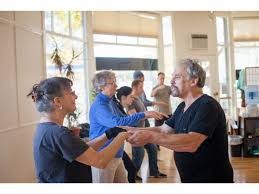

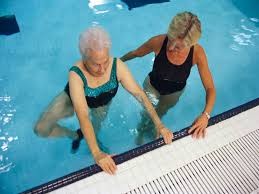
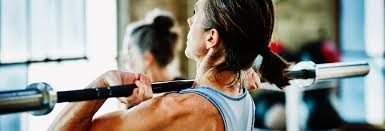
We know that joints that don't move well deteriorate faster due to lack of joint proprioception (joint position sense) feedback back to the brain. Reduced movement (sometimes people describe this as stiffness in a joint) causes lack of feedback to the brain, this leads to reflexive deterioration in the muscles bridging the joint and subsequent reduced stability in the joint – and, you guessed it, degeneration in the joint comes next. See a musculoskeletal specialist (like us here at the Adelaide Chiropractic Centre – experts at reintroducing movement back into your musculoskeletal system) regularly to manage the repetitive challenges your work/play has on your body. Let us help keep you moving and reduce the impact OA can have on your life.
For those living with symptomatic OA, the chronic pain that is an element of OA for some people can be a real challenge. As discussed in our blog on pain, the brain is using pain as a tool to keep the joint safe, and is sometimes being a far too vigilant a protector. If we let this pain stop us from being active then deconditioning accelerates and the OA will progress faster. People in this situation need help to design a plan to teach the brain they can do more than the protective brain thinks they can. It takes work and time, but in this way disability can be reduced and quality of life improved. We can work on this with you at the Adelaide Chiropractic Centre too.