
Pain 2026
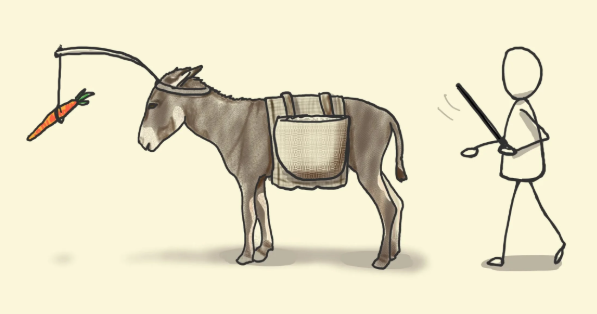
Pain is a tool your brain uses to keep you safe. It's a trigger your brain pulls to make you change your behaviour ~ read more here.
Pain doesn’t come from a damaged tissue ~ read more here.
Pain is an experience shaped by the body (bones, muscles, joints) and the nervous system ~ including the brain, spinal cord, stress response, sleep, emotions, movement patterns and overall health.

Pain is shaped by the summation of your experiences to date plus the predictions your brain makes in response to the risk it perceives in what’s happening right now ~ read more here.
Sometimes the brain can become overzealous in keeping you safe, hyperalert to risk, and this can lead to chronic pain. This is the down side of neuroplasticity (our brain’s ability to adapt and change), but the upside of neuroplasticity means you can recover! ~ read more here and here.
Some examples of chronic pain include neuropathic pain, fibromyalgia, complex regional pain syndrome (CRPS) and central sensitisation ~ read more here. These conditions often overlap and people can be given multiple diagnoses over time.
Pain is complicated. Pain science is complicated…, but fascinating too (for this chiro, anyway).
I’ve written a lot about this topic, as I work with people experiencing pain every day. It’s important for me to be on the cutting edge of understanding this science so I can help as many people as possible be the best they can be. To be able to translate the hard scientific jargon into digestible jewels of knowledge I can gift to people to apply as they heal and grow.
Earlier this year Quadling et.al. published a review of recent pain research in the International Journal of Molecular Sciences. They were specifically looking at chronic pain management and how multidisciplinary teams were getting the best results.

It’s completely understandable that someone experiencing chronic pain would very much like to take a tablet and have the problem disappear. The review looked at painkillers (like paracetamol and anti-inflammatories (incl. NSAIDs like ibuprofen), antidepressants and nerve medications, opioids, migraine medications, steroids and nerve blocks. These strategies give some people some relief, but the research shows that medications rarely resolve the pain completely, can come with side effects and that sometimes the benefits decrease with time. This may be why many people with chronic pain cycle through different medicines without long term improvement. The research is clear, medications alone usually aren’t enough.
Quodling et.al. go on to discuss the non-drug approaches that are helping people who have chronic pain. This is Dr Quodling’s summary:
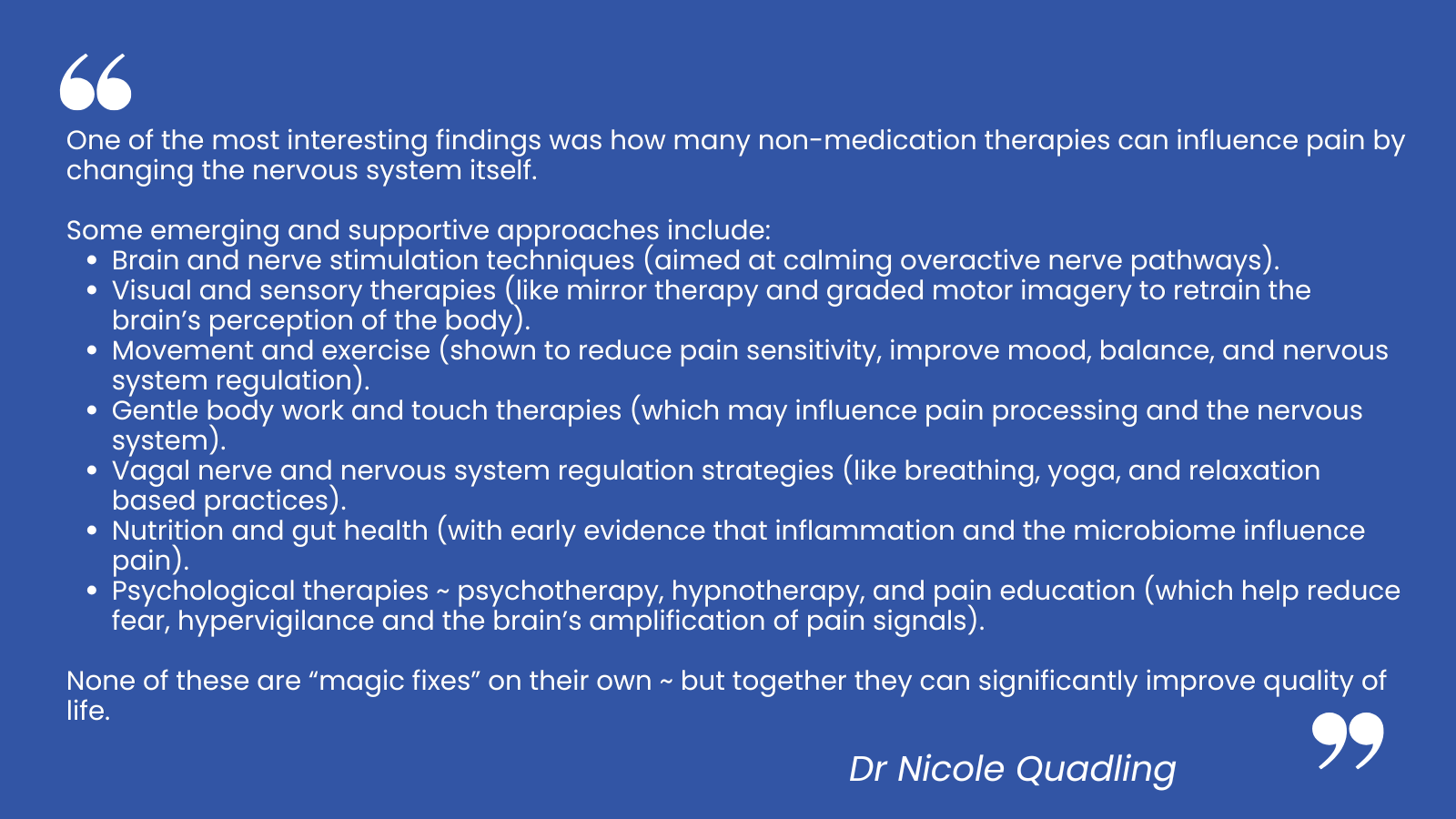
The research was very clear that people with chronic pain respond the best when care addresses the whole person. It has to be holistic, not reductionist.
This requires a health team covering: medical care, physical therapies, nervous system regulation, psychological support, lifestyle changes, education and self management.
As a chiropractor, my role on this chronic pain health care team involves strategies to bring calm to the nervous system and trigger cues of safety.
The tools I use and share with the person include education, hands on care to promote positive neuroplasticity changes, movement and posture advice, lifestyle suggestions, shaping of exercise plans for strength and ability, pacing of recovery, enrolling people in actively engaging in their recovery and being part of that team themselves.
With chronic pain, the goal is not necessarily to eliminate the pain, but to improve quality of life. We are after steady progress in the right direction and aim to appreciate each achievement as we go.

References:
N. Quadling et.al. Beyond the Pain: Rethinking Chronic Pain Management Through Integrated Therapeutic Approaches—A Systematic Review https://www.mdpi.com/1422-0067/27/3/1231
Dr N Quadling ~ Why Chronic Pain Is So Complex – And Why One Treatment Alone Rarely Works https://www.coelevate.com.au/blog/why-chronic-pain-is-so-complex-and-why-one-treatment-alone-rarely-works